Pessac-Léognan lives in the shadow of its neighbours, Médoc to the north, Saint-Émilion and Pomerol to the east. It doesn’t fit the usual Bordeaux shorthand: everyone knows the Left Bank means Cabernet Sauvignon and the Right Bank means Merlot, gravel versus clay, structure versus plushness. Pessac-Léognan sits, geographically, squarely on the rive gauche, but its identity refuses that tidy split. It grows both Cabernet Sauvignon and Cabernet Franc, alongside Merlot, both gravel and clay, and, more surprising still to anyone who thinks of Bordeaux as red-wine country, it is quietly producing some of the most sought-after white wines on earth. What are we to make of a region that keeps declining to pick a side?
The name itself doesn’t tell you much. Pessac-Léognan takes its name from two of its communes, but it is the gravel that defines much of the place. Deep beds of quartz pebbles, carried down by ancient courses of the Garonne over geological time, create the well-drained soils that Cabernet Sauvignon likes so much. The stones absorb heat during the day and release it at night, while the poor, free-draining soils force the vines to look deeper for water. Where the gravel thins and clay takes over, Merlot finds its footing instead, while the cooler pockets and more clay-rich soils favour the white varieties.
Today’s Pessac-Léognan AOC, created in 1987 from the northern part of the historic Graves region, covers roughly 1,600 hectares across ten communes and around 70 growers. It stretches south and west of Bordeaux, from the edge of the city into the vineyards around Léognan and Martillac. Around four-fifths of production is red, with the rest white, which already makes Pessac-Léognan unusually white-leaning by Bordeaux standards. The reds lean on Cabernet Sauvignon and Merlot, with Cabernet Franc and Petit Verdot providing the supporting cast. The whites are built on the classic Sémillon and Sauvignon Blanc pairing, Sémillon bringing weight and waxy texture, Sauvignon Blanc bringing lift and citrus drive, with smaller amounts of Sauvignon Gris and Muscadelle used for perfume and spice.
It’s worth being precise about geography here, because Pessac-Léognan is really a relatively young name attached to a very old wine region. What most wine lovers picture when they hear “Graves”, including famous names like Haut-Brion, La Mission Haut-Brion and Smith Haut Lafitte, was historically part of Graves. In 1987, Pessac, Talence, Léognan and the neighbouring communes were separated from the northern part of the Graves appellation to form Pessac-Léognan. The great 1953 classification of Graves’ best châteaux still stands, and those labels still proudly read “Cru Classé de Graves”, but strictly speaking, the wine in the bottle today is Pessac-Léognan.
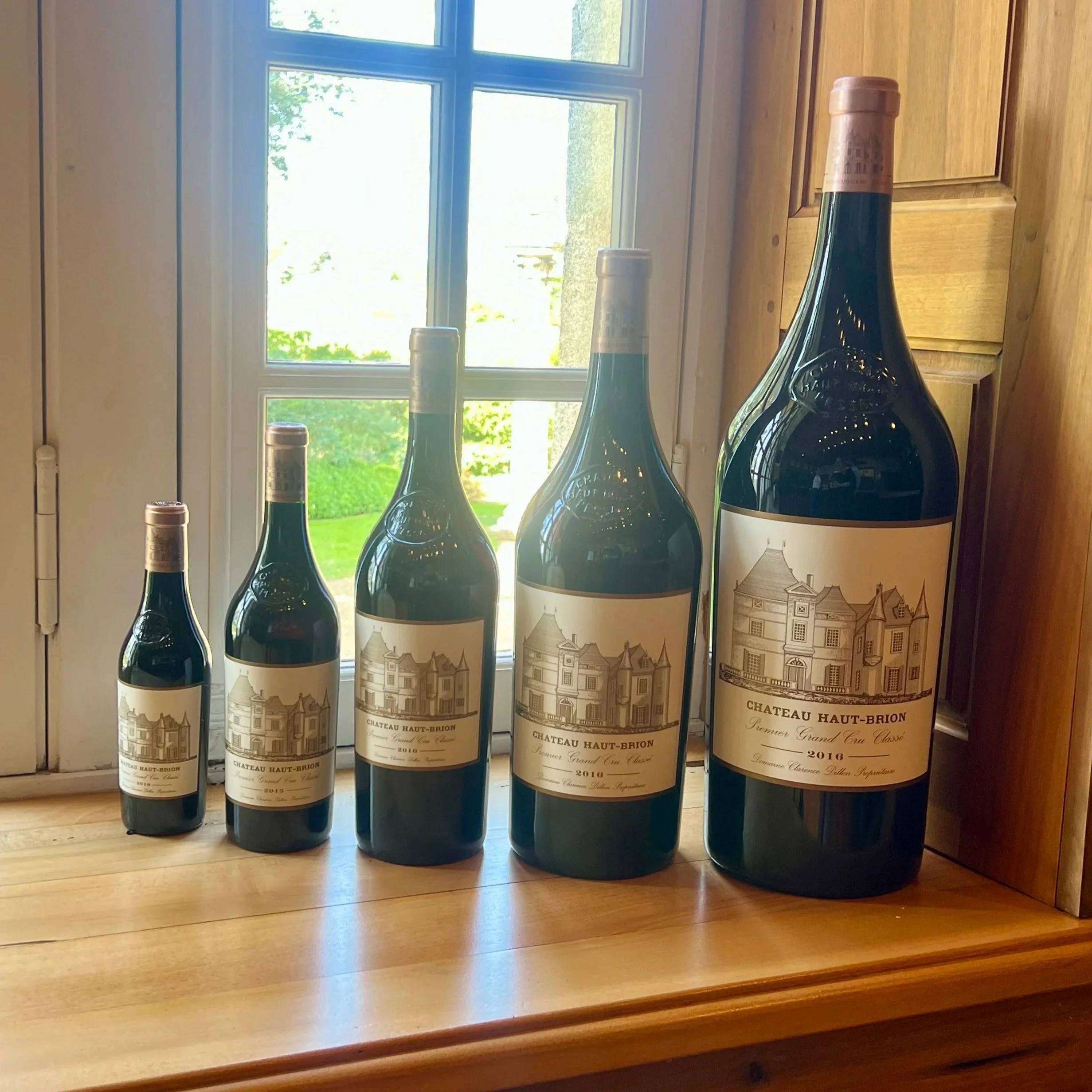
La Mission Haut-Brion, 2026.
Château La Mission Haut-Brion
Few estates carry as much layered history as La Mission Haut-Brion. Its story starts in 1540, when the Bordeaux merchant Arnaud de Lestonnac bought a plot called Arregedhuys, directly across the road from the already-established Château Haut-Brion, and, in a nice piece of symmetry, married the sister of Haut-Brion’s own owner, Jean de Pontac, that same year. Over a century later, in 1664, the estate passed by bequest to a congregation of Lazarist priests, the Congregation of the Mission, which is where the name comes from. The Fathers built a small chapel, Notre-Dame de la Mission, in 1698, and the château itself followed in 1713. Contrary to what you might expect of a monastic property, the wine was never reserved for the clergy. It was sold commercially from early on, and its reputation grew to the point where, by the mid-19th century, La Mission was fetching prices matching or exceeding Second Growth Médocs, all while remaining outside the 1855 Classification simply because it wasn’t in the Médoc.
The Revolution swept the estate from the Church in 1792, and it changed hands repeatedly over the following century and a half, American owners among them, including the Chiapelle family, who in 1815 commissioned the wrought-iron gates that still guard the property today. It finally earned formal recognition in the 1953 Graves classification, and in November 1983 it was bought by Domaine Clarence Dillon, the same family that had owned neighbouring Haut-Brion since 1935. The purchase effectively reunited the two great estates under one roof. Since then, the Dillon family, and Prince Robert of Luxembourg, who runs the estates today, have invested heavily: a new vat house for the 1987 vintage, renovated cellars and chapel, and the absorption of two more historic Graves classified growths into La Mission’s own fabric, the red vineyard of La Tour Haut-Brion from the 2006 vintage onward, and, from 2009, the white vineyard once known as Laville Haut-Brion, now bottled as La Mission Haut-Brion Blanc.
The estate today covers close to 29 hectares, the great majority, around 25 to 27 hectares, under red varieties, with a small, precious 3.7 hectares reserved for white. The red blend runs roughly 45 to 50% Cabernet Sauvignon, 40 to 44% Merlot and the rest Cabernet Franc, though the exact split shifts with the vintage. Over the decades since the mid-1990s, the plantings have quietly tilted a little further toward Merlot, at the expense of both Cabernets. Total output sits around 5,000 to 7,000 cases of the grand vin a year, a fraction of what a Médoc First Growth produces, and roughly half the volume of Haut-Brion itself.
La Mission Haut-Brion is usually a rather muscular wine, built for pairing with fresh, traditional cuisine rather than sitting quietly on its own. I’d go so far as to say we’re watching a new style take shape in recent vintages: wines that are less extracted, aged in a slightly lower share of new oak than they once were, with a clear focus on freshness over sheer power. Tasting notes on the 2022, for instance, describe a wine that turned out “less muscular and more approachable than it appeared en primeur”. Texture over brute concentration. It’s a shift that mirrors what’s happening across the top of Bordeaux and, frankly, in fine wine more broadly: the château is working to make wines that are genuinely enjoyable in their youth, not just built to be forgotten in a cellar for thirty years.
To some extent, I understand the logic. Fewer and fewer people have access to a proper cellar, and there’s little point aging a wine for a decade in a hot Paris apartment or a damp garage when the château could simply make something that drinks beautifully at five years old. And yet, there’s something genuinely poetic about laying a case down in an old, humid cellar and forgetting about it for the better part of a decade, only to pull it out one evening, uncork it at the table, and watch it silence a room. I’m not sure that pleasure has an equivalent, and I hope Bordeaux never fully engineers it away.
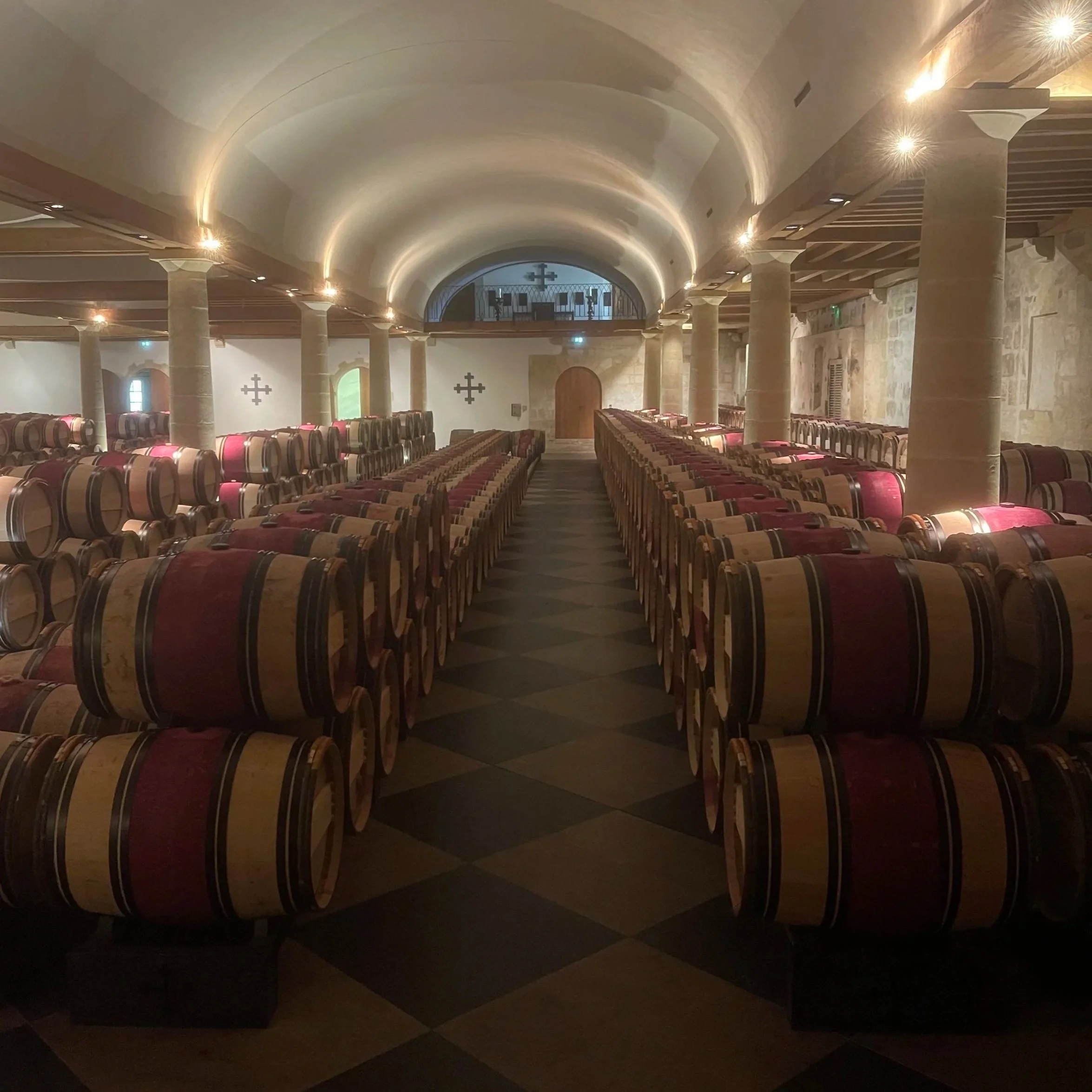
La Mission Haut-Brion, Bordeaux, 2026.
Château Smith Haut Lafitte
Another wonderful estate to visit, a little further south in Martillac, is Smith Haut Lafitte. Its roots go back further still than La Mission’s: the noble Verrier du Boscq family planted the first vines here in 1365, on a gravel rise then known simply as Lafitte. In 1720, a Scottish wine merchant named George Smith bought the property, attached his own name to it, and built the elegant 18th-century chartreuse that still stands at its heart. The estate’s coat of arms records the layers of ownership that followed, fleurs-de-lis for the founding Verrier du Boscq family, a crescent for Bordeaux’s “Port of the Moon”, before it passed, in the mid-1800s, to Lodi-Martin Duffour-Dubergier, and through various hands over the following century.
Its modern chapter began in 1990, when Daniel and Florence Cathiard, both former members of the French national Alpine ski team, who had spent the 1970s and ‘80s running the Go Sport sporting-goods chain, fell for the estate and bought it. They spent three years restoring it before moving into the historic chartreuse themselves, and set about a genuine transformation: ending mechanical harvesting in favour of hand-picking, building an in-house cooperage in 1995 that today produces the majority of the estate’s own barrels, and bringing in consultants Michel Rolland and Stéphane Derenoncourt to help refine the winemaking. The estate converted to organic certification in 2019, applying biodynamic practices without seeking full certification. Along the way, a chance discovery during the 1993 harvest, when the Cathiards’ daughter Mathilde and her husband met a University of Bordeaux polyphenols researcher, led the family to found the skincare brand Caudalie, and in 1999 to open a spa on the estate grounds, fed by a hot spring found five hundred metres underground. The family’s ambitions later reached Pomerol, Napa Valley and beyond. Daniel Cathiard passed away in February 2026 at the age of 81; Florence remains president and co-owner, with their daughters continuing the family’s involvement in the estate.
Smith Haut Lafitte today farms around 78 hectares, 67 of them red and 11 white. The red blend runs roughly 60% Cabernet Sauvignon, 30% Merlot, 9% Cabernet Franc and a whisper of Petit Verdot. The whites are the wine I’ve always found most captivating here, and the blend has held remarkably steady across recent vintages: around 90% Sauvignon Blanc, with 5% Sauvignon Gris and 5% Sémillon rounding it out, aged roughly a year on the lees in about half new oak. That consistency is relatively recent history, though. Before the Cathiards took over in 1990, the white was made from 100% Sauvignon Blanc. The small additions of Sémillon and Sauvignon Gris since then have added texture, spice and a touch more weight, without ever displacing Sauvignon Blanc as the backbone of the wine. That’s exactly why it tastes so recognisably itself, vintage after vintage: layered, balanced, and that particular deep gold that seems to hold light rather than just reflect it.
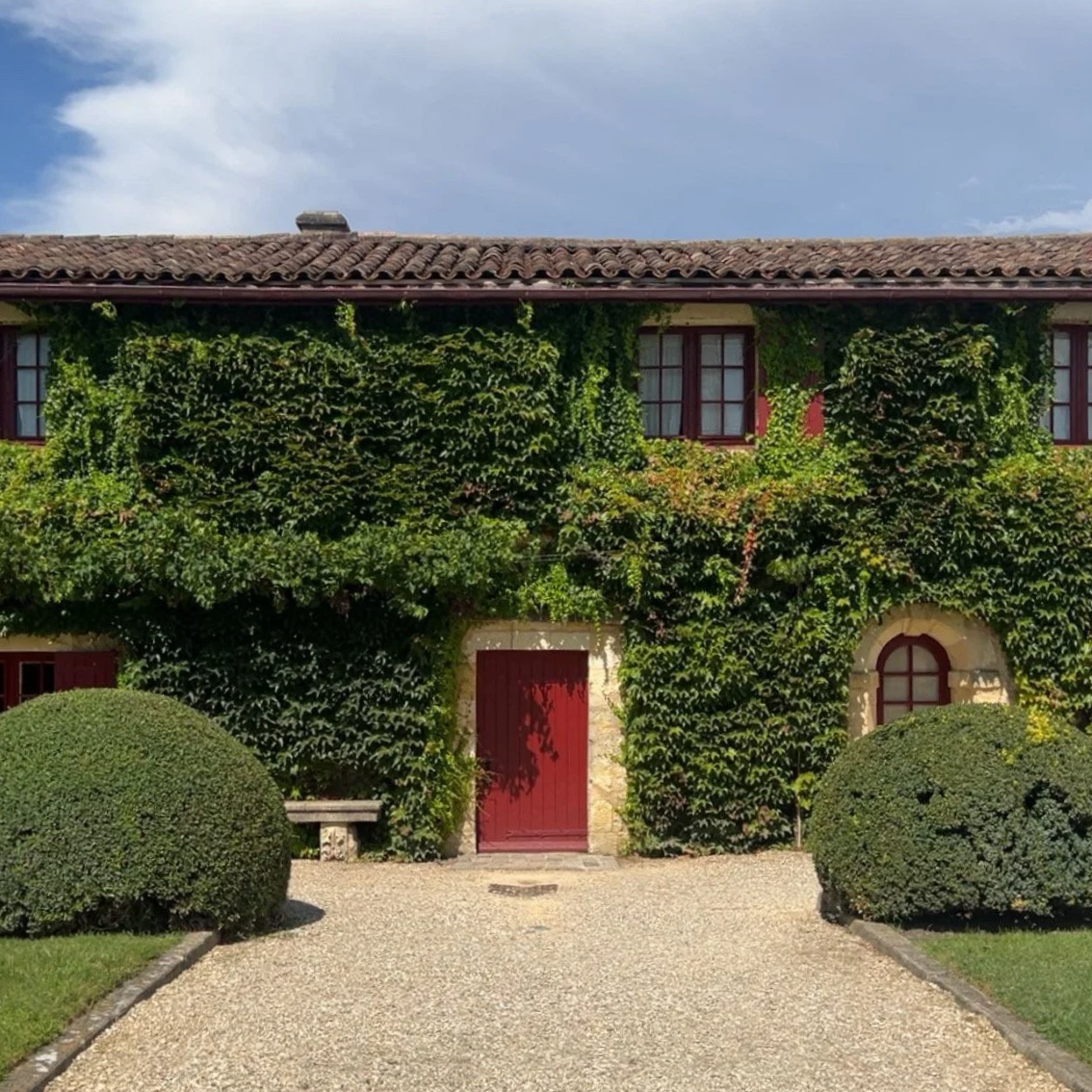
Smith Haut Lafitte, Bordeaux, 2026.
Perhaps the most striking thing about Pessac-Léognan is that the whites regularly outshine the reds, and that’s a genuine advantage at a moment when white wine consumption is holding up far better globally than red or rosé. There’s also a structural point worth making. One of Bordeaux’s persistent problems is sheer scale: you’ll rarely struggle to find a Grand Cru Classé red from the last ten vintages sitting in a European shop, often at or below its original release price, because production runs into the thousands of cases. The great whites of Pessac-Léognan live in an entirely different world. Château Haut-Brion Blanc is made on fewer than three hectares and produces under 800 cases in a typical year; La Mission Haut-Brion Blanc is similarly scarce, at around 500 to 600 cases. Both regularly sell for many multiples of their own second wines, and getting hold of a bottle, even at a serious price, is genuinely difficult.
Pessac-Léognan has plenty to offer looking forward, and climate change is reshaping the conversation, if not always in the direction people assume. Across Bordeaux as a whole, growers are leaning harder on Cabernet Franc and other late-ripening varieties precisely because Merlot, which flowers and ripens earliest, is the grape most exposed to heat stress, and the region has even authorised a handful of new, heat-tolerant varieties like Touriga Nacional and Arinarnoa for limited use. In Pessac-Léognan specifically, though, the more interesting story may be Cabernet Sauvignon’s own resilience: its late ripening and its natural home in these free-draining gravel soils mean it has so far proved relatively resilient to warming, which is one reason some growers here are leaning further into it rather than away from it. Add to that the region’s growing reputation for white wine, at a moment when whites are gaining ground globally exactly as reds struggle, and Pessac-Léognan has a genuinely interesting decade or two ahead of it. I wouldn’t be surprised if the name eventually stands up alongside Bordeaux’s biggest names rather than in their shadow. Buy in now, while it’s still affordable.