
As critical as the choice of the bottle for tonight’s dinner is the glass that you are going to use. Often forgotten, the vessel you use to serve the wine will have a dramatic influence on the experience. Far from being a snobbish whim, proper glassware is a pillar of the modern wine world.
We have all had the horrendous experience of ordering a glass of wine in a hip wine bar, only to find that it is served in a comically small glass, sometimes referred to as the INAO glass. I am sure that such a glass has its benefits for very technical wine analysis. Most of us, however, would simply like to enjoy the wine without taking pages of notes about emotions and experiences. I just want to enjoy my glass of Gamay, not attempt to run an egalitarian experiment where all wines are forced into the same glassware.
The other equally traumatizing experience is the frivolity allowed with Champagne glasses. The flute is the most inappropriate glass ever made. It is a cumbersome attempt to keep bubbles confined in a narrow space, creating a shape that does nothing to promote the wine itself. Much of Champagne’s complexity, including notes of citrus, brioche, nuts, and toast found in some great wines, is simply lost. Am I falling victim to another form of sensory decline, or is it the flute’s fault? On the other side of the spectrum, the coupe, a commercial invention from the 1950s, has such a broad surface area that the bubbles escape quickly, making the wine go flat faster and reducing its freshness and texture. Dreadful.
Great glassware, like many great wines, comes from the East. In a world where one wine glass could serve an immense variety of wines, Claus J. Riedel popularized the idea that glass shape should be tailored to specific grape varieties or wine styles. The Riedel family is currently based in Austria, but they historically originated on the other side of the former Habsburg Empire, in Bohemia, now part of the Czech Republic. In another era, when empires shaped much of Central Europe, Bohemia was famous for its glassware. The tumultuous history of the twentieth century forced the Riedels to move west, but their reputation was already well established. So when they said that you could not fully enjoy a Riesling in the same glass as a Pinot Noir, people listened.
It may sound like a stroke of marketing genius, persuading wine lovers that a single set of glasses is no longer enough to honor their most cherished bottles. Perhaps that is partly true. Yet anyone can perform a simple, almost humbling experiment: pour the same red wine into a water glass, a slender flute, and a broad bowl, then taste each in turn. The wine does not merely look different, it seems to change its mood. Aromas retreat, flavors bloom or fall mute. The experience shifts as unmistakably as when wine is served too cold or too warm.
I mentioned the Riedel company, which produces a broad range of glasses, including machine made collections, and it should be a great entry point for the curious glassware buyer. If you are looking for a lesser known brand, Zalto has produced some of the finest glasses in recent years. They are elegant, light, and offer a broad selection for different wines, perhaps the most beautiful Pinot Noir glasses you could find. Klaret is even more niche, a lesser known company that I discovered recently while visiting Edi Simčič in Brda. They offer dangerously light glasses that will sublimate your cherished bold red wines. Hand blown, of course, no machinery here. All these companies come from an area formerly part of the Austro Hungarian Empire. This is no coincidence. The Habsburg knew how to live in style.
So perhaps Claus Riedel was right. You need to diversify your glass game to ensure that you elevate the bottle you kept for a special occasion. And please, stop drinking Champagne from a flute. A fine hand blown white wine glass will do far better.
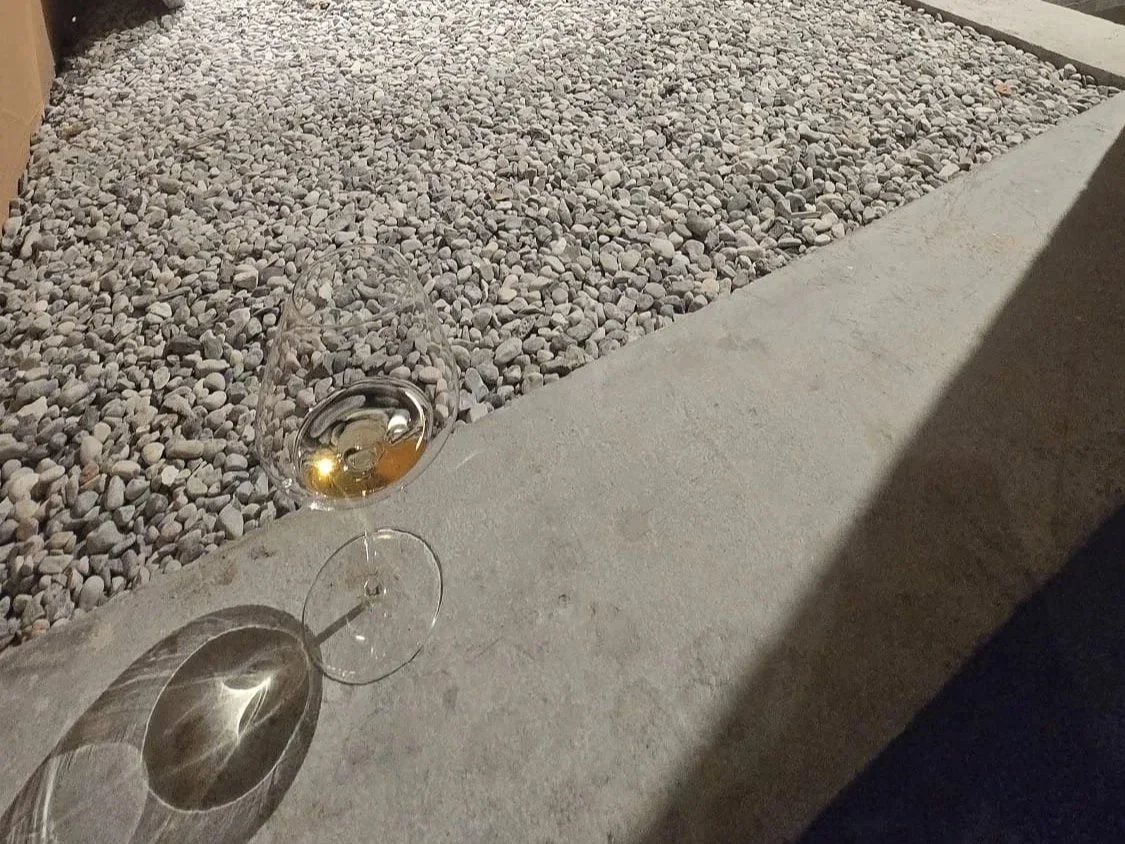
Ščurek winery, Dobrovo v Brdih, Slovenia, 2026.