
I detest rosé. It is simply a wine I cannot enjoy. Yes, sure, over the years I’ve had interesting ones. I recall a rosé from Südtirol that I surprisingly enjoyed: crushed flowers, acidic and wild strawberries. Truth be told, it was made from Lagrein, a grape variety with the peculiar trait of red flesh. Even with very brief skin contact, the color tends to be as strong as an alpine Pinot Noir. I even purchased a magnum of it—probably the only rosé I will ever hold in my cellar.
I’ve had many rosés over the years, from Provence to Italy; countless encounters. I cannot bring myself to like it. I even grew up in a place where rosé made from Pinot Noir is quite famous, with the poetic name Œil-de-Perdrix. Did I drink it wrong? Very cold, room temperature—my detestation persisted. So I traveled: Catalonia to Provence, Italy to Austria. Different grapes, different styles. But why?
Rosé has so much I should like. It is light, served chilled, with bright acidity. It often has lovely fruity notes and a vivid color. When swirled, it dances in the glass with an elegance heavier wines rarely achieve. It evokes the freshness of spring, roasted chicken with grilled vegetables, a salad, or a prawn cocktail. It is refreshing. Nothing more.
Perhaps that is my problem with rosé. It is not that it is simple. I can and have enjoyed bottles of wine cheaper than a coffee in Zürich. It is that rosé is simply wine. It reduces wine to the ranks of mere drinks rather than elevating it to where it deserves to be. Wine is the only alcoholic beverage that creates itself from a single ingredient: grapes. Wine is there to elevate a meal, to shine in conversation. It is not there to quench your thirst. Have a glass of water, for God’s sake.
Yes, I admit I look like a knob. Who am I to scorn a cheap, easy wine? Rosé is the quiet lifeline that keeps winemakers afloat. It’s cheap to make, easy on the wallet, and needs no cellaring. At a time when wine is drunk less than before, it makes perfect sense to sell something unpretentious, something that draws in younger crowds. Winemakers love it because it’s effortless, fast, and thrives everywhere—from beach bars to summer festivals across Europe.
Sure, you can find great Beaujolais or amazing Riesling for the same price, but they won’t have the same holiday feeling. Unknowingly, rosé has become a brand, a lifestyle. Too many, it is a terrace on the Côte d’Azur, perfect for mindful, slow sipping. It pairs with everything, so you can simply share a bottle at the table (unless I’m attending).
So what about the rosé I actually enjoyed? Demian from Pranzegg. The winery sits just above Bolzano and is well worth a visit. Picture this: a plate of calf’s head, a crisp salad, and a glass of Demian in hand. Yes, it sounds like a marvelous last meal. Will anyone write poems about rosé? Probably not. But who cares? Drink it if you like it and don’t be a snob like me.
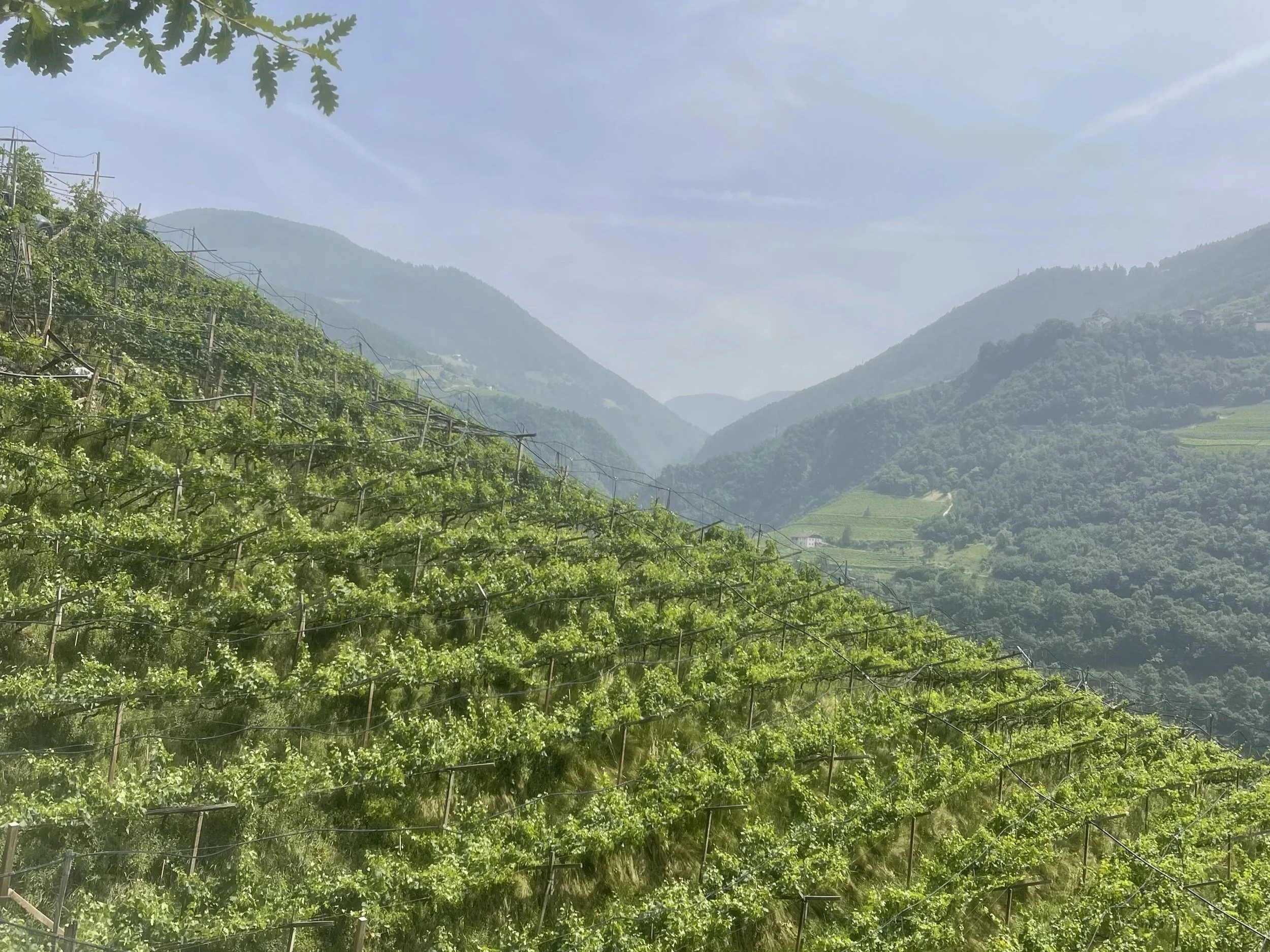
Hills above Bolzano, Italy, 2025.