
Wine regions are often put into neat little boxes. Either you belong to the elite club, carrying centuries of tradition on your shoulders, or you are a new, emerging region that still has to earn its place on the map. Brda somehow manages to be both. Wine has been made here for what feels like forever, yet because of its recent history, the region is also starting with a blank page. That’s what makes it exciting.
You probably never heard of Brda because it is small, very small. Although the country has a very rich winemaking history, it only has 15’000 hectares of vines, of which Brda accounts for 1’800 only. As a point of comparison, Bordeaux uprooted 27’000 hectares of vines in the last two decades, nearly double of the size of the whole country of Slovenia.
To understand Brda, you really need to go there. Its borders were never drawn naturally but imposed by central governments. Once part of the crown lands of the Habsburg monarchy, the region was partially integrated into Italy after the First World War. The Slovenian side later became part of Yugoslavia, before Slovenia gained independence in the early 1990s. Even today, you can drive along a road that crosses national borders several times within minutes.
The landscape is a patchwork of rolling hills dotted with small villages. The population is mostly Slovenian, but Italian is commonly spoken. This dual identity is deeply reflected in the vineyards. Brda is one of the rare places in the world where grapes can cross a border without losing their appellation. Winemakers may own plots on both the Italian and Slovenian sides, yet as long as the wine is produced in Slovenia, it remains Slovenian. The borders exist on maps, not in the soil.
Winemaking here follows a different logic than in many traditional regions. Rather than specializing narrowly, wineries often work with a wide range of grape varieties and styles. There is a practical wisdom to this approach. Trends change (remember when Merlot fell out of favor) and flexibility becomes a strength. Producers in Brda can adapt quickly, offering diversity rather than betting everything on a single identity. During my last visit, I’ve seen more producers making high-quality sparking wines with drier notes. This is a way to mimic the new global trends for drier champagne, at a fraction of the cost. A good example will set you at 10-15€.
The wineries themselves feel more like working farms than curated museums. Some estates are undeniably luxurious and offer high-end accommodations, but even there, you will often find a form of pluriculture. Olive oil, livestock, small-scale agriculture, wine is rarely the sole source of income. This independence matters, especially when consumption trends decline. It keeps decisions grounded and long-term.
Hospitality is another constant. Slovenes are remarkably welcoming. Tastings rarely happen without slices of ham or pršut appearing on the table. The wines deserve a place on the global wine scene for all the right reasons. Producers like Edi Šimičič or Movia are excellent entry points, widely exported and consistently strong. Yet the real magic lies with the small, often invisible wineries you discover only by visiting. Some produce just a few barrels a year and don’t even have a website. This is not amateurism. It reflects a farming culture where winemaking is one expression of land ownership, not an industrial obsession.
A short digression helps explain why Brda may be on the verge of something bigger. After the Second World War, the global car market depended heavily on the United States. Competitors were either destroyed or incapable of matching Detroit’s level of quality. It took decades for German and Japanese manufacturers to catch up. France enjoyed a similar advantage in winemaking throughout the twentieth century. It was long perceived as the unquestioned reference. Italy only began to challenge this dominance in the 1980s, not because they suddenly made better wine, but because they learned to present and promote it better.
Eastern Europe re-entered the global wine scene in the 1990s. Many of these countries had deep winemaking histories but had spent nearly fifty years producing cheap, volume-driven wines while overexploiting their land. Recovery took time, but today the shift is undeniable. France now faces serious competition from the East. Drinkers are more curious, less attached to blue-chip labels. Look at the wine lists of today’s trendiest spots: Eastern European wines appear more often than Bordeaux.
Drink what you like but give Brda a chance. Its terroir is exceptional. It produces remarkable reds, especially from Merlot, and whites with a level of balance and acidity that much of the West can no longer achieve. Brda doesn’t need hype. It just needs time and a few open minds.
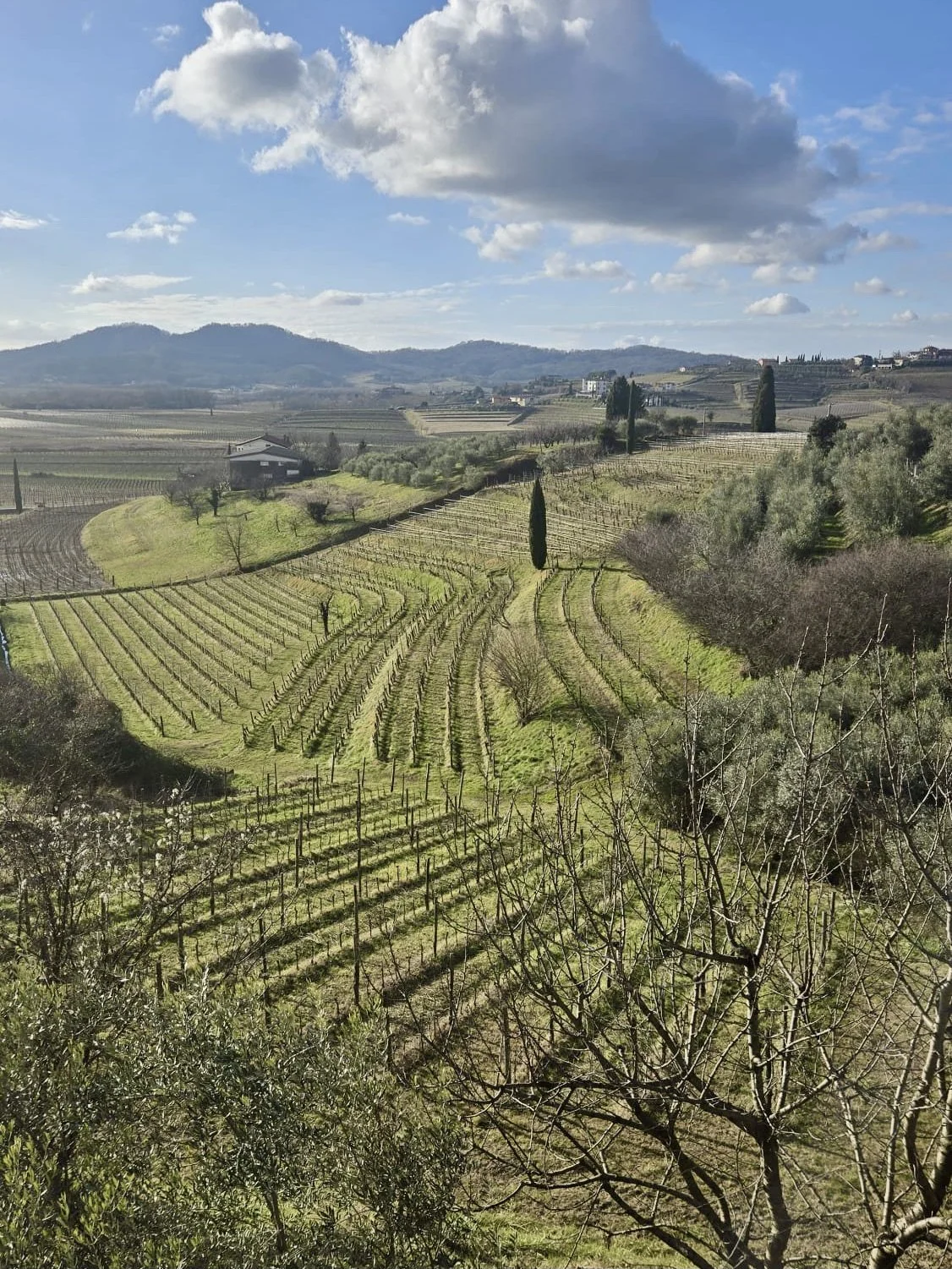
Vipolže, Slovenia, 2026.