Among wine snobs, Burgundy is kind of an untouchable sacrosanct place. The wines have a stellar reputation, they cost a fortune, if you can even get a bottle, because they are also very rare. But is it truly justified? I beg to differ.
Sure, it is undeniable that red Burgundies are great on paper. They are backed by centuries of history and were drunk by counts and kings of France. Interestingly, winemakers, and particularly monks, were quite visionary and created segregated plots of land depending on the quality of the soil and the grapes it produced. It has to be acknowledged that the Burgundy way of making wine has reshaped the wine world, where the single vineyard concept is now everywhere. From Mendoza to Germany, you see winemakers classifying their land and creating single vineyard wines. Even in Bordeaux, where blending done by the château was the norm, you suddenly see some single vineyard wines.
Red Burgundies are also very limited and somehow secretive. You do not find much of the good stuff. You need to beg your well shelved wine shop to get you an allocation. Forget going to Burgundy and getting a bottle directly from the winemaker. The great vignerons have outsourced the commercial aspect of winemaking. This sounds all great. Artists, some of them are, can focus on producing masterpieces rather than explaining that a barrel is made out of wood and Pinot Noir is a red grape to a group of American tourists.
Unfortunately, this also means that they lost control of prices. The biggest misfortune of Burgundies is the way they are priced and especially by whom. A myriad of middlemen cut huge margins from already expensive wines. A bottle of Gevrey Chambertin could cost 50 euros from the property and be sold by your wine shop, under strict allocation, at 300 euros. So wines are expensive, but the money gets pocketed by middlemen rather than winemakers.
Pinot Noir is grown on all continents. Burgundy apart, Switzerland makes some of the finest examples you can drink. Some may have heard about Graubünden in eastern Switzerland, but there is another equally small yet more interesting region, Neuchâtel.
It is a small region on the foothills of the Jura Mountains. It can boast a very long history. Romans were there, abbeys were built one thousand years ago, and monks created vineyards in a cadastral style you can also find in Burgundy. The region was, until recently, very restrictive regarding what could be planted. Red wines were mostly made from Pinot Noir. The region is small. Wine production is easily tenfold smaller than Burgundy. Talking about scarcity.
So here you go, a region similarly rich in history, with an old focus on Pinot Noir, vineyard classifications, and scarcity. The next Burgundy, you say? Perhaps. The main difference lies in its promotion and international recognition. Too small and unknown, the wines were drunk by local noblemen rather than in Versailles. Today, it is not as highly regarded and this may be our luck. Good wines from Neuchâtel are difficult to find internationally, but they are not expensive, in the sense that a good bottle will cost less than 60 euros. While Burgundy was busy becoming a brand, Neuchâtel simply kept making wine.
There are a few very good winemakers, but two are outstanding in their own way. One embracing a tradition that crosses generations, and one embracing modern winemaking with lower intervention. The first winery is itself worth a visit. Nestled in the small medieval village of Auvernier, Domaine de la Maison Carrée is a well known institution in the region. Their Pinot Noirs are a textbook representation of Neuchâtel. I particularly love their Auvernier, which is their village wine, for the Burgundy readers. Most of their wines are aged in large foudres, which mellow the tannins and focus on red fruits. Strawberry is what comes to mind. Above all, they have a way of inviting you to a second glass.
The second winemaker some readers may have heard of is Morgan Meier from Domaine des Landions. A relatively new winery, it has created a sensation in Switzerland. Here you will find a modern interpretation of the terroir, with more precision. Wines are aged in Burgundy barrels, with a focus on individual plots and drastic grape selection, making yields astonishingly low. There is also a desire to intervene as little as possible to get the purest form of the grape.
Above all, what I enjoy about these wines is that they are not trying to be Burgundy. Taste them blind and you will not think of Burgundy, yet you will know it is a Pinot Noir. This is what needs to be cherished. It is another expression of the grape, even using different clones. Neuchâtel has a different way to sublimate Pinot Noir. It has many arguments that would make you rethink your love for Burgundy.
Label drinkers out there should remember that this is all a craze, and taste will change. Sweet wines were once loved, and people paid high prices for Spätlese from the Mosel or Sauternes a hundred years ago. Now some châteaux in Bordeaux are suggesting cocktail recipes for their sweet wines. Your overpriced Burgundy bottles lying in your cellar may be part of a bubble. In the market dance, do not be the one without a chair when the music stops. Sell your expensive Burgundies and buy loads of Pinot Noir from Neuchâtel.
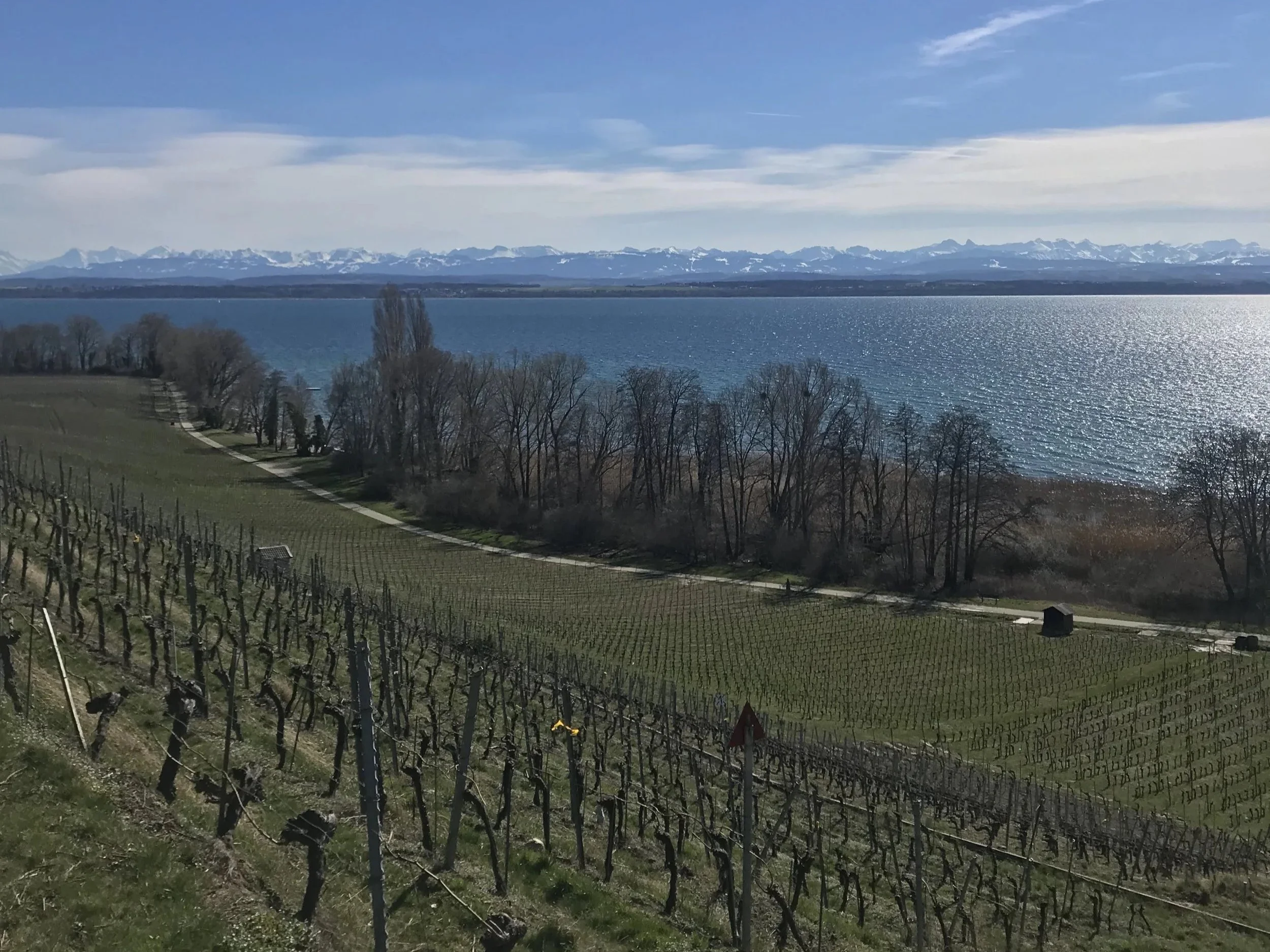
Bevaix, Switzerland, 2023