You got tricked, I’m afraid. Wine isn’t an investment. It’s a beverage. I have empathy for you who got tricked into this article believing you would become the next wine millionaire. Let me explain why investing in wine is a ludicrous idea.
First, we should answer the question: what is an investment? Investments are mostly two things. Either you buy shares of a company, making you a partial owner of that company. Alternatively, you can lend to a company through bonds or other legal means. You can already see that wine is a problem. If you buy a bottle of wine, you don’t own the winery, unfortunately, nor did you lend money to the company. You bought a perishable product. That’s it.
Secondly, a real investment should yield you returns over the years, be it coupons from bonds or dividends from your shares. Wine yields nothing while it sits in your cellar. It just sits there, silently aging, costing you money in storage, insurance, and the creeping anxiety that one power outage will wipe out your “portfolio.”
Now, why is it genuinely problematic to treat wine as an investment? Storage is the first landmine. Temperature, humidity, vibration, light: get any of these wrong over a decade and your thousand-dollar bottle becomes an expensive vinegar. Unlike a share of Apple, your investment can literally rot.
Then there is the trend problem, and this one is fatal. Wine is extraordinarily dependent on fashion. In the 1990s and 2000s, Bordeaux was king. Critics worshipped it, collectors hoarded it, prices soared. Today, Burgundy is the new craze, with Grand Crus reaching prices that would have seemed satirical twenty years ago. Tomorrow? Nobody knows. Perhaps it will be Barolo, perhaps Champagne, perhaps some obscure corner of the Jura that only three sommeliers currently care about.
This means wine is not an investment. It is speculation in its purest form. You would need to anticipate which region or producer becomes fashionable next, time your exit before the trend dies, and sell your bottles without the convenient liquidity of a stock exchange. Good luck finding a buyer for your case of 2005 Pauillac when everyone has suddenly decided they only want single-vineyard Chambolle-Musigny.
The counter-argument you will hear is that investors buy rare wines, and scarcity protects value. The data tells a different story. The Liv-ex Fine Wine 100, the industry’s main benchmark index, has fallen roughly 30% from its 2022 peak and sits today at levels last seen in 2020. Bordeaux has fared even worse. First Growths that were fetching record prices a decade ago have seen sustained price declines as Chinese demand collapsed and collectors rotated into Burgundy and Champagne. A case of Lafite Rothschild 2008, once a darling of the market, has lost a significant portion of its auction value over the past five years. These are not the hallmarks of a reliable asset class. They are the hallmarks of a fad.
Rarity alone means nothing either. Bulgarian wines are rare in Western Europe. That doesn’t make them expensive. Rarity needs to coincide with demand, and demand in wine is fickle, emotional, and driven by the whims of a handful of influential critics, whose tastes can shift an entire market overnight.
Wine is as much an investment as playing roulette at the casino. Actually, it is worse. Roulette has a statistical foundation: the odds are known, the house edge is fixed at a predictable percentage, and you can calculate exactly what you are getting into. Wine has none of that. There is no formula, no odds, no rational basis for predicting which bottles will appreciate and which will quietly lose value in someone’s cellar. At least the roulette wheel is honest about being a gamble.
So the next time someone tells you they are “investing” in wine, smile politely. Then ask them about their storage costs, their exit strategy, and their plan for the next trend shift. Or better yet, skip the conversation entirely and just pop the cork on that Mouton Rothschild 2000. At least that way, someone is getting something out of it.
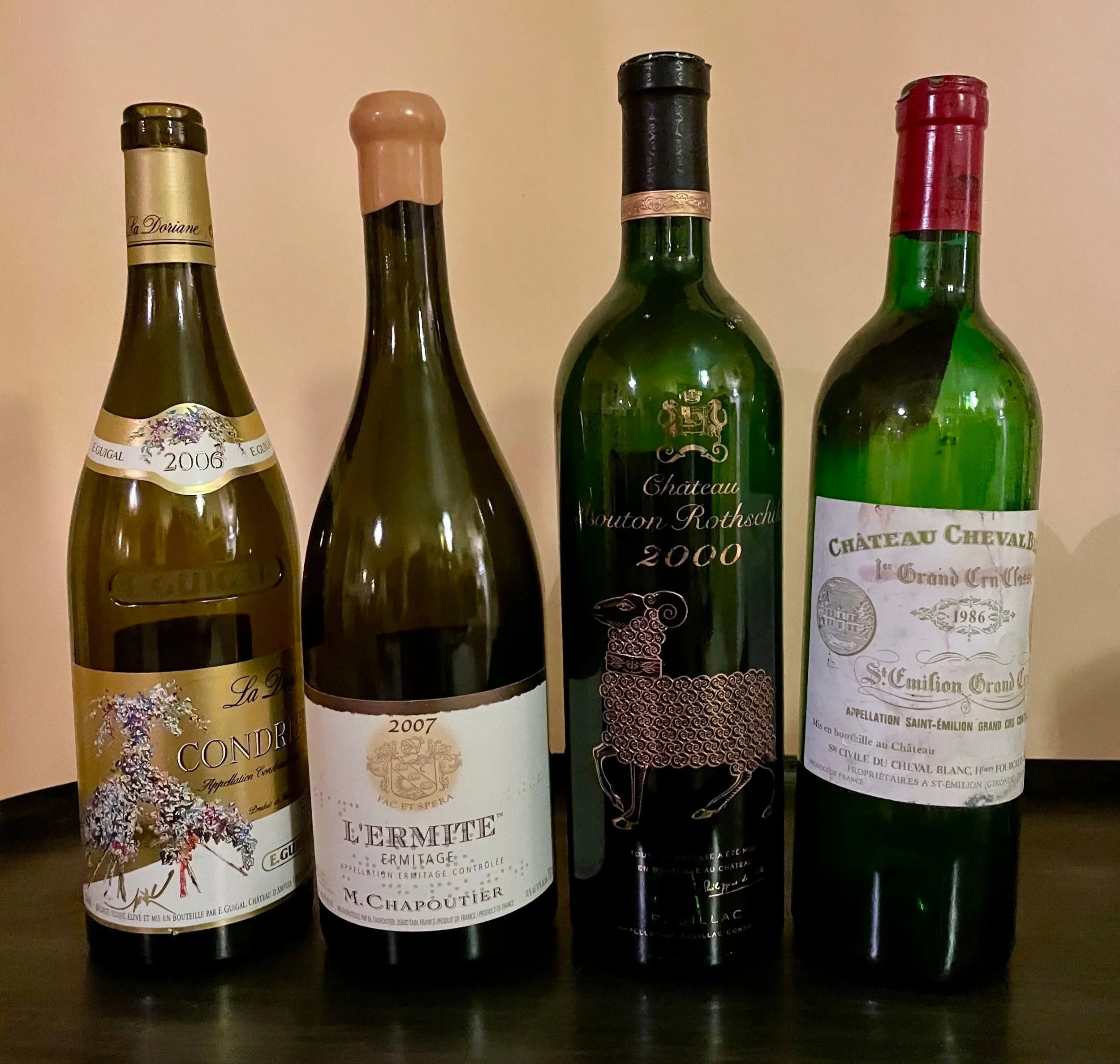
Switzerland, 2021.