Austrian wines are enjoying a quiet revolution, and you see them popping up on wine lists around the world more and more often. Precise Grüner Veltliner from the Wachau, fruit-driven Blaufränkisch from the Neusiedlersee, crisp Gemischter Satz from Vienna. There’s a southern sibling to all these wines: Südsteiermark, and it deserves all your attention.
Südsteiermark sits at a very important crossroads. It used to be a key passage to the Balkans, and anyone with some interest in history knows the tumultuous relationship Austria had with the region, from Ottoman raids that made planting a vineyard a genuine act of faith to the unfortunate assassination in Sarajevo that helped trigger the First World War. Vineyards are not terraced on 45-degree slopes by people unsure they’ll still be there in ten years, so every conflict set the region back by a generation. It took the calmer, wealthier Austria of Maria Theresa and Joseph II for winegrowing to recover. It was also during their reign that the Buschenschank was born: the right for growers to pour and sell their own wine directly from the farm, a tradition that is still alive today.
Another defining feature of the region is its porous border with Slovenia. Once part of the same empire, the two countries were separated during the twentieth century, only to be reunited, at least in European Union terms, not so long ago. It’s difficult to imagine now that guards once patrolled these vineyards to control who was leaving the former Yugoslavia. Today you can walk from one country to the other without even carrying an ID. Long live the European Union, you might say.
Wine has been part of the landscape for a very long time. Vines were already growing here under the Celts, well before the Romans planted vineyards along the Sulm valley. Monasteries preserved the tradition throughout the Middle Ages, but the real turning point came in the early nineteenth century with Archduke Johann. The Habsburg prince fell in love with Styria, established an experimental estate, and introduced French varieties, including Sauvignon Blanc and Chardonnay, known locally as Morillon. Phylloxera slowed that progress, and the two World Wars almost wiped viticulture out altogether. By 1960, vineyard area had shrunk to a fraction of its former size. Everything since has been a slow and deliberate rebuild, focused on quality rather than volume.
That emphasis on origin is now reflected in the region’s classification system. Südsteiermark became a DAC (Districtus Austriae Controllatus), Austria’s appellation system, in 2018 alongside Vulkanland Steiermark and Weststeiermark. Together, the three Styrian regions follow a Burgundy-inspired hierarchy: Gebietswein for regional wines, Ortswein for village wines from one of five recognised communities (Kitzeck-Sausal, Eichberg, Leutschach, Gamlitz and Ehrenhausen), and Riedenwein for single-vineyard bottlings. Wines must be dry and, uniquely in Austria, entirely hand-harvested. On slopes this steep, there is little alternative.
Sauvignon Blanc may have arrived with Archduke Johann, but it only became Südsteiermark’s signature grape in the late twentieth century. Producers such as Manfred Tement helped redefine it, moving away from sweeter styles towards dry, terroir-driven wines. The climate does the rest: warm, humid days balanced by cool Alpine nights preserve freshness and aromatic intensity, while marl and limestone soils add texture and depth. The result is a style that feels more layered and mineral than the grape’s greener reputation elsewhere might suggest.
The region also has an unofficial cru system. There is no government classification beyond the DAC, but the STK (Steirische Terroir & Klassikweingüter) effectively fills that role. Twelve leading estates classify their best vineyards as Erste STK Ried or Große STK Ried under strict production rules that include capped yields, minimum vine age, hand harvesting and extended ageing before release. Every classified vineyard must be farmed by the estate itself, with no purchased fruit. It is a private initiative, but a serious one, and it directly influenced the official DAC hierarchy that followed.
Südsteiermark has never competed on volume. It is one of Austria’s smallest wine regions, so it has built its reputation on precision instead. A clear hierarchy of origin, a respected private vineyard classification and a compelling climatic story make its wines remarkably easy to understand and, more importantly, easy to appreciate.
The best part is that these wines remain surprisingly accessible. They consistently overdeliver for their price, they’re increasingly easy to find outside Austria, and they offer a distinctive expression of Sauvignon Blanc that deserves a place alongside the world’s better-known regions. Next week, we’ll move from the landscape to the people behind it and meet the winemakers who have turned Südsteiermark into one of Europe’s most exciting wine regions.
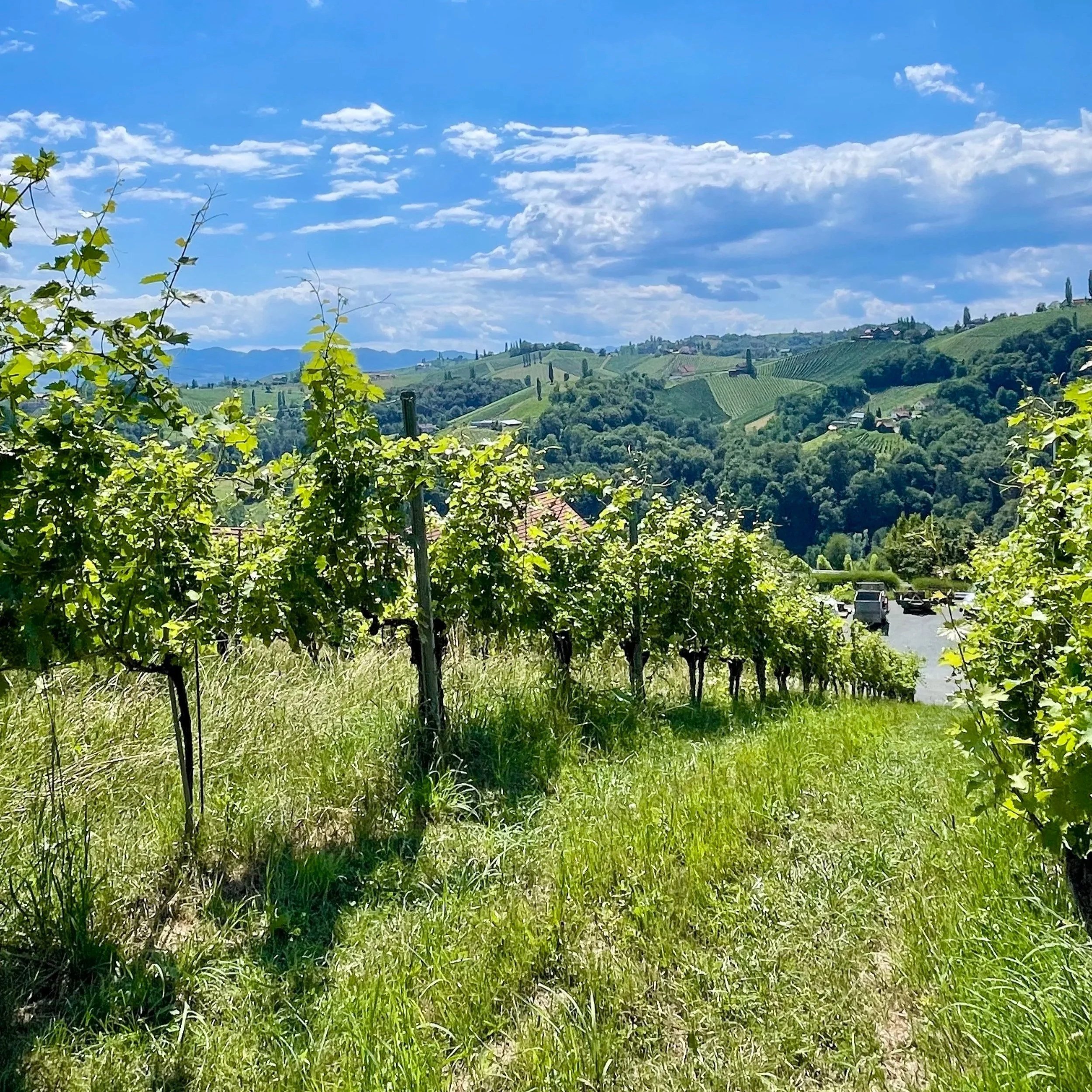
Ehrenhausen an der Weinstraße, Austria, 2026.