
Revolutions in the wine world are rare. Most of the time, wine moves through small evolutions rather than sudden ruptures. The saddest of these upheavals was, of course, the arrival of phylloxera in Europe in the late 19th century, which devastated vineyards across the continent. A happier one is the ongoing resurgence of quality winemaking in Central Europe. Last week, we heard of another quiet revolution taking shape in the wine world.
The Michelin Guide, famous for its tyres as much as its stars, transformed the restaurant world when it introduced its first guide in 1900, followed by the Michelin Star rating in 1926. For nearly a century, the Star remained Michelin’s flagship distinction, a mark so powerful it could make or break a restaurant’s fortunes. In 2024, Michelin extended its philosophy of excellence beyond the table, launching the Michelin Keys to rate hotels, proof that the brand was no longer content to stop at the plate.
Recently, the Guide announced it would apply that same philosophy to wine. Starting in 2026, Michelin is introducing the MICHELIN Grapes, a three-tier rating system (One, Two or Three Grapes) alongside a “Selected” category for producers deemed consistently reliable, echoing the Bib Gourmand distinction in the restaurant guide. Estates are judged on five criteria: viticultural quality, technical mastery, identity (how well a wine reflects its terroir and its producer’s ethos), balance, and consistency across vintages. Tastings are collaborative rather than blind, a deliberate departure from Michelin’s anonymous restaurant inspections, reflecting how differently top estates need to be approached.
The Guide began, fittingly, with two of France’s most storied regions. The inaugural selection was unveiled on 7 July 2026 in Dijon, covering Burgundy’s Côte de Beaune, Côte de Nuits and Côte Chalonnaise. Ninety-four estates were recognised: nine received Three Grapes, including Domaine de la Romanée-Conti, Domaine Leroy, Domaine d’Auvenay, Roumier and Coche-Dury, with 20 earning Two Grapes, 33 earning One Grape, and 32 more named as Selected producers.
At first glance, it may look like nothing more than an evolution. The most versed among us will point out that Gambero Rosso has run a similar three-glass (“Tre Bicchieri”) system for Italian wines for decades. That’s true, but the difference lies in scale and intent. Gambero Rosso is a respected national guide; Michelin is a global institution whose stars have shaped consumer behaviour across cuisines and cultures for over a century. When Michelin moves, the entire industry pays attention.
More importantly, this should be read as a quiet rebellion against the way wine has been judged since the late 20th century: the 100-point system. We’ve come to accept it as the norm, but it makes little sense in the modern world. Who can honestly say a 93-point wine tastes worse than a 94-point one? Taste is deeply personal, and it’s also a snapshot in time: a wine that impressed a critic last year may show entirely differently today. The truth is that the point system was, above all, a brilliantly effective sales tool, particularly for resellers in the United States. In countries where wine is part of daily life and culture, the focus has always rested more on the winemaker’s identity and outlook than on a single number attached to a single bottle.
As the wine world drifts away from mass consumerism, artisanal winemaking, with Burgundy as the archetype, is increasingly prized. In that world, points become almost irrelevant, while the story and hand of the winemaker carry real weight.
What happens now to Robert Parker’s Wine Advocate, the publication most responsible for popularising the 100-point scale, and which Michelin itself now owns? Parker founded the Wine Advocate in 1978, built his reputation and delegated wine regions to fellow critics from 2001, before Michelin acquired a 40% stake in 2017. Two years later, in November 2019, Michelin completed full ownership of the publication.
Michelin therefore now controls two wine guides built on two different approaches: one driven by scores that have become indispensable commercial tools, the other placing greater emphasis on tradition, quality and consistency over time. Whether Michelin intends to let the two coexist, or slowly let the Grapes eclipse the points, remains to be seen.
Time will tell whether this becomes a revolution or simply another evolution. Whether this proves to be the wine world’s July 14, 1789, or merely another step in its slow evolution, only time will tell.
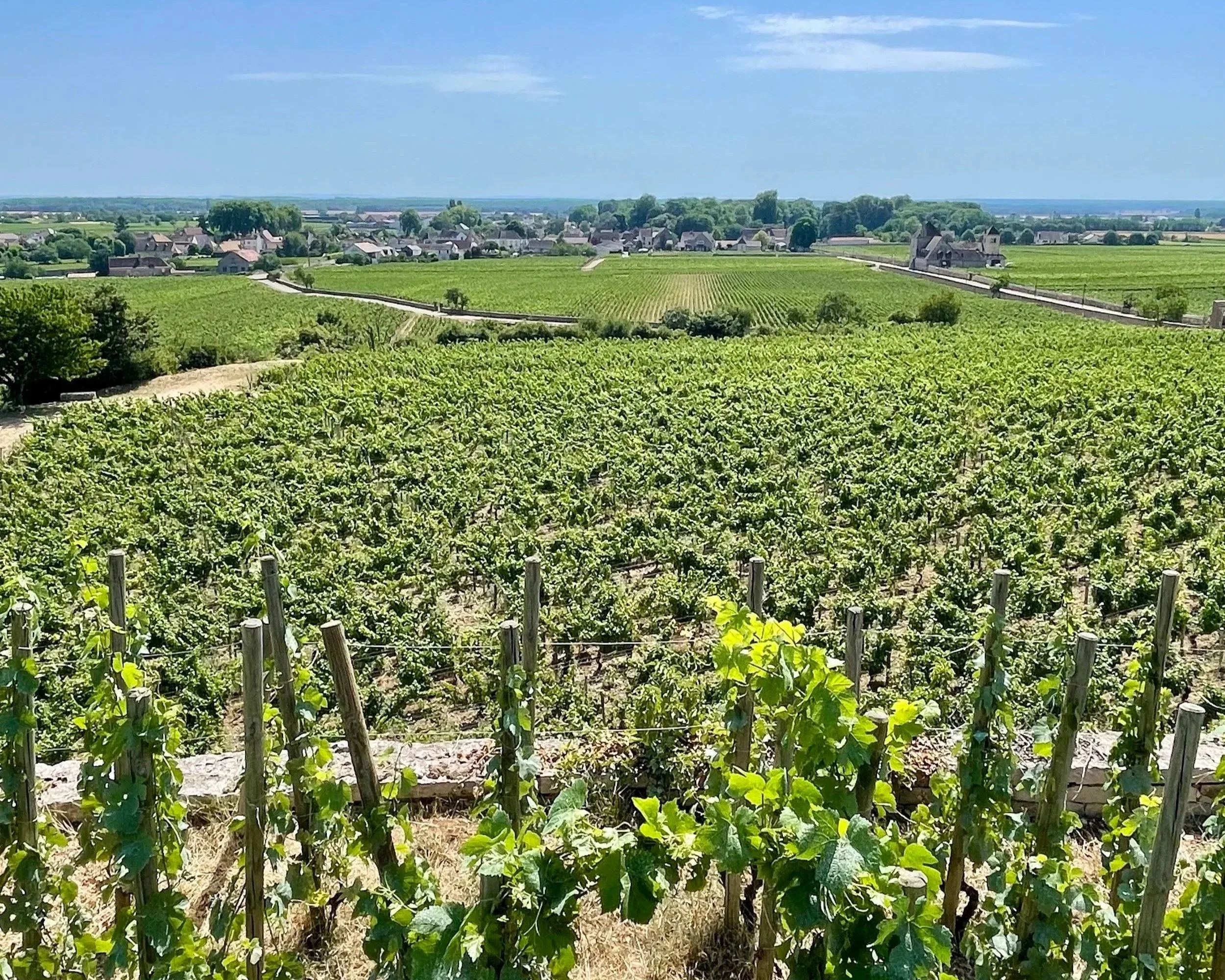
Chambolle-Musigny, Burgundy, 2026.