
If there is one experience that captures the spirit of Südsteiermark better than any winery visit, it is spending an afternoon in a Buschenschank. You come for the wine, stay for the food, and leave wondering why more wine regions haven’t adopted the same idea.
The Buschenschank is not a recent invention dreamed up by tourism boards. Its origins date back to 1784, when Emperor Joseph II granted winegrowers the right to sell their own wine directly from the farm without needing a tavern licence. The privilege allowed farmers to supplement their income by serving the wines they produced, accompanied by simple, cold dishes made from local ingredients. More than two centuries later, that principle remains largely unchanged.
Legally, a Buschenschank is not a restaurant. Austrian law defines it as a seasonal establishment operated by agricultural producers who may serve their own wine, cider or fruit juices, together with a limited selection of traditional cold food. Hot meals are generally not permitted, and neither is serving wine purchased from other producers. The idea is simple: what you drink comes from the vineyard outside, and what you eat comes from the farm, the surrounding countryside or trusted local suppliers.
That simplicity is precisely what makes the experience so appealing. A typical table might include cured ham, smoked sausages, pâtés, cheeses, fresh horseradish, pickled vegetables, pumpkin seed spreads and thick slices of farmhouse bread. None of it is particularly elaborate, nor is it meant to be. The food exists to showcase the wines, while the wines bring the food to life. It is one of the most natural examples of regional gastronomy you’ll find anywhere in Europe. And when it comes to finishing the meal, you can forget about asking for a coffee. At best, you might be offered a great schnapps.
For the wineries themselves, the Buschenschank has become far more than a historical curiosity. It is one of the most effective ways to introduce people to their wines. Visitors no longer stop for a quick tasting before moving on to the next estate. Instead, they settle in for lunch, order another bottle, compare vintages and often leave with a few cases for the cellar. The experience transforms a simple tasting into a lasting memory, creating a connection that is difficult to achieve across a tasting counter.
That matters more than ever. Wine consumption is declining in many traditional markets, younger drinkers are becoming more selective, and wineries everywhere are searching for new ways to engage consumers. Südsteiermark has quietly been offering one answer for over two centuries: don’t just sell a bottle, create an experience around it.
Perhaps this is the lesson other wine regions should take from Styria. Faced with declining consumption, many estates reduce opening hours or close their cellar doors outside the tourist season. In Südsteiermark, the response has been almost the opposite. Invite people in, feed them well, let them spend an afternoon overlooking the vineyards and allow the wines to tell their story at the table rather than in a tasting room.
It’s a simple idea, but one that feels increasingly relevant. In a world where people may be drinking less, they are often looking for experiences worth drinking for. The Buschenschank has understood that for more than 240 years.
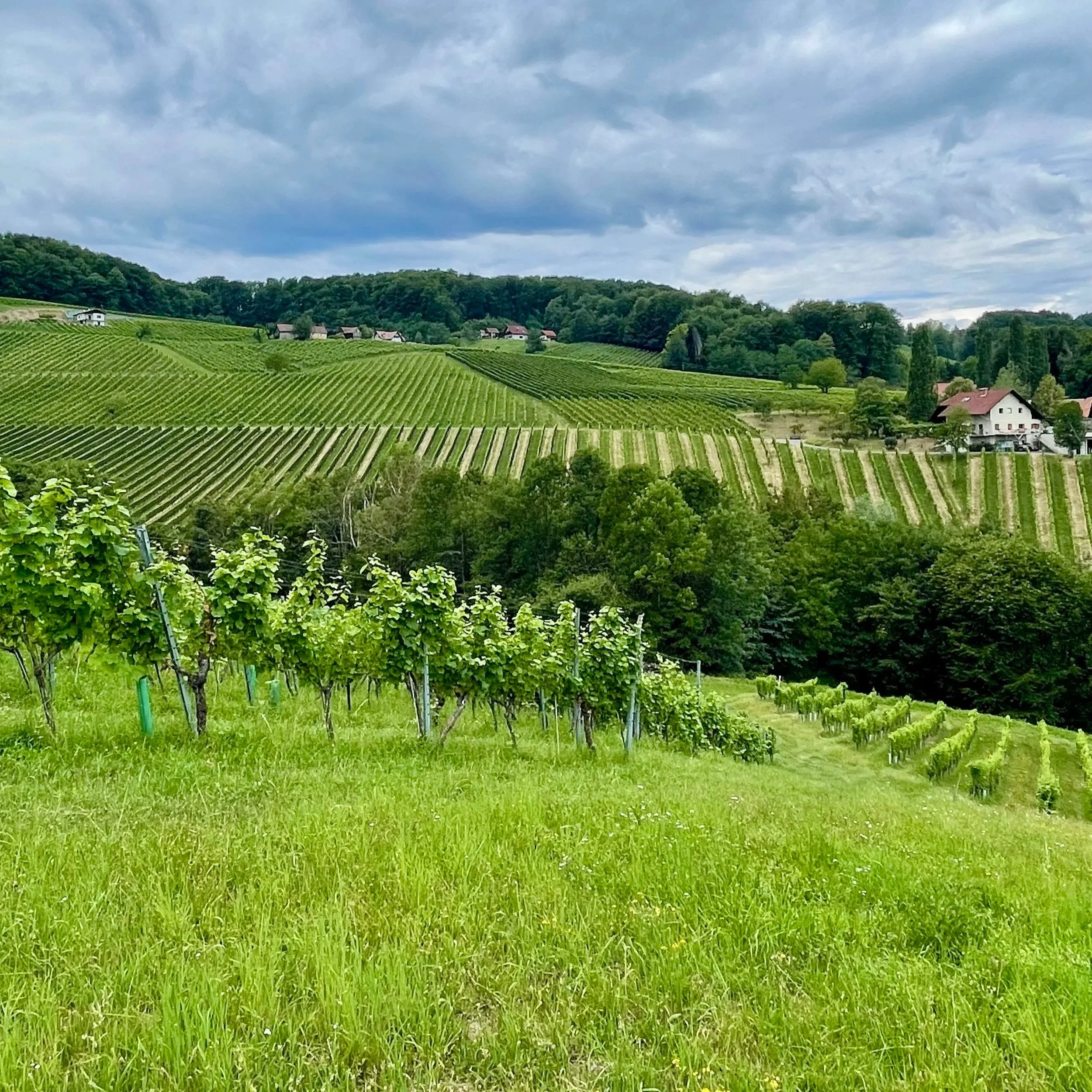
Straß, Austria, 2026.