
Erzsébet Pince
I shall redirect readers to my initial article on Tokaj to get a better grasp of the region.
Erzsébet Pince is a leading winery in the quiet village of Tokaj. A wonderful way to visit it is to start from the train station. If you are lucky and visit at the right season, the train from Budapest will drop you into a place from another time. A gentle mist covers the hills and the houses. As you walk toward the center of the village, beautiful small houses slowly reveal themselves. Walk past the church and soon a small white house will appear on your left. This is the place. This is where Hajnalka Prácser and her family have worked their winemaking marvel in Tokaj.
The winery was started by her parents, Miklós Prácser and his wife Erzsébet. Like many winemakers of the modern era, they began by buying parcels to make Aszú. Their children joined the winery in the 2000s. They own what is probably the prettiest cellar in the village, dating back to the 1600s. It is said that the Romanovs rented these cellars to store their Aszú allocation. They were famously immense consumers of wines from Tokaj. Peter the Great even had Cossacks escorting Tokaj wine convoys to Saint Petersburg.
What sets this winery apart is their absolute mastery of both dry and sweet wines. Over the years, I’ve found that you often encounter two competing dogmas in winemaking. Traditionalists emphasize sweet wines—be it Aszú or Szamorodni. They do make dry wines, but these are often regarded as by-products, something to cleanse the palate before getting to the real experience: the eye-opening Aszú. On the other hand, modernists focus on promoting dry wines. They live with their time and understand that the great terroirs of Tokaj can produce wines that compete with the world’s best. Their Aszú is often excellent, but frequently overpriced and overshadowed by compelling single-vineyard dry wines.
Back to Erzsébet Pince: this balance is their true success. They understood that traditionalists and modernists must coexist within a winery. You should do both. The existence of sublime dry whites should not overshadow the presence of mouth-watering Aszú. Tasting the wines in front of the cellar doors is a wonderful experience.
All the wines are interesting in their own ways, but I have always been staggered by the depth of their Király-dűlő, made entirely from Furmint. Over the years, this wine continues to shine and is well worth cellaring for at least five years. One should also not overlook the equally beautiful, yet much rarer, Betsek-dűlő, made entirely from Kabar. And just as you begin to reflect on the lack of acidity in so many white wines you’ve had in your life, Hajnalka will pour a glass of Aszú.
Behold the grail—the sumptuous wine made for kings and emperors. Tropical fruits, broken stones: their Aszú is a textbook representation of the style, unfolding in three acts. First, an explosion of sweet fruits—apricot, peach. Then, acidity and minerality dramatically intertwine on the palate, leading to an ultimate long finale. A real treat, one that will only improve with time.
Erzsebet Pince, H-3910, Tokaj, Bem út 16.
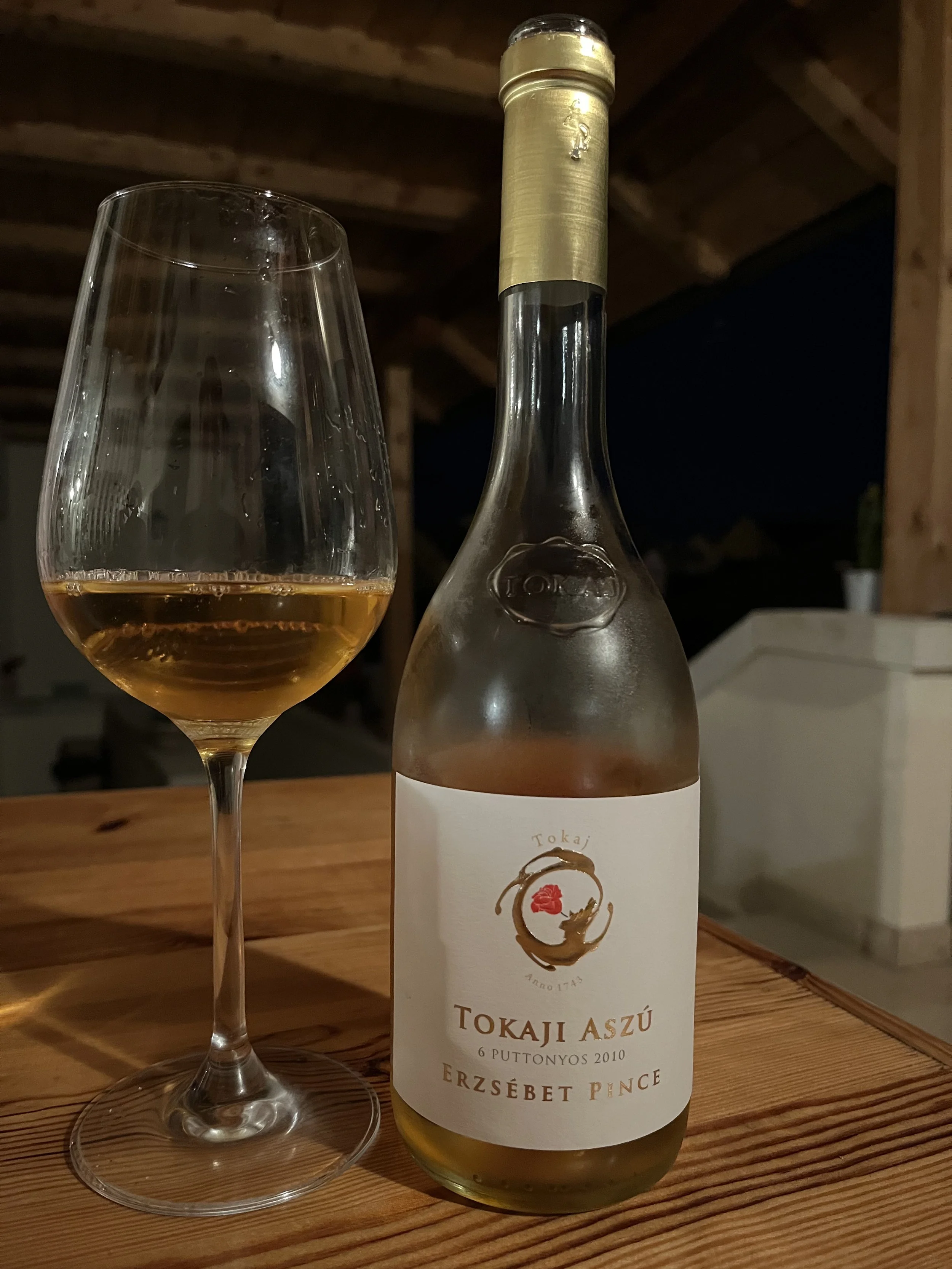
Erzsébet Pince, Tokaj, 2022.