This is an ode to the second. The pole position has always attracted the spotlight. We’ve focused on the first man on the moon (who is Buzz Aldrin by the way?!).
The wine world has increasingly leaned toward a Burgundian classification system, where wines are segmented by the quality of the plot of land on which the grapes grow. This is, of course, valuable, as it allows for a more nuanced distribution across a multitude of plots, or climats. There is a level of ranking with premier cru and grand cru, but who is to say that Les Narvaux is better than Poruzot or Genevrières?
Beyond taste, it is also a powerful commercial structure, often encouraging collectors to buy across multiple sites. Some wine regions have understood this and are not fully adopting a strictly terroir driven hierarchy. Germany had elements of cru classification historically, but these have only been reinforced more systematically over the past 20 years. More recently, Südsteiermark has implemented a similar approach.
While I welcome this direction, promoting specific terroirs and dedicating time and effort to limiting yields and improving overall quality, I cannot overlook the more contrarian approach of winemakers in Bordeaux.
Recently, I had the opportunity to taste the 2023 Bordeaux vintage at a tasting organised by Gerstl in Zürich. Most of the wines had only recently been bottled. And so begins the familiar dance: wine amateurs and collectors tasting wines that are not truly meant to be drunk at that stage. I admire critics who can project that a wine will be exceptional in 20 years, but that is perhaps another discussion.
While tasting the latest offering from Cos d’Estournel, we were interrupted by a gentleman who only wanted to taste the grand vin. The merchant suggested trying Les Pagodes de Cos beforehand. This was declined without hesitation. He would not consider anything associated with a second vin.
Unlike my tasting neighbour, I do not dismiss second vins. They are one of the most successful commercial inventions of Bordeaux. While some châteaux use second vins for experimentation, or for parcel selection and declassification, their traditional role is as a supporting expression of the grand vin. Often made in a similar style and from the same estate vineyards, they typically include fruit from younger vines or parcels not selected for the grand vin. They should be seen as an entry point to the estate’s identity, playing a supporting role. Direct comparison is misleading: the grand vin will almost always sit above in the hierarchy. Unlike in Burgundy, where an entry level regional wine can occasionally outperform a lower tier premier cru depending on the producer and vintage.
Another defining characteristic of second vins is their approachability in youth, and that is intentional. They are generally designed to be enjoyed earlier in their life. They tend to be more fruit driven, with softer tannins and less structure for extended ageing. For most consumers without ideal cellars to store fine wines, they are often the more practical choice. They were made with that audience in mind.
Take Lagrange 2023: a precise Saint Julien in a classical style, a wine that will benefit from time. Next to it, a bottle of Fiefs de Lagrange, a second vin already open and expressive, perfectly suited to accompany steak frites among friends. So why shun it?
The final argument for second vins is price. They are arguably the great bargain of Bordeaux. Their price is consistently lower than that of the grand vins. They trade at a substantial discount, often half or even a third of the price of their counterparts, making them an intelligent purchase.
Forget the first; appreciate the second. It is the supporting role that deserves recognition. Even the Oscars honour Best Supporting Actors. It is time to give second vins their place in your heart.
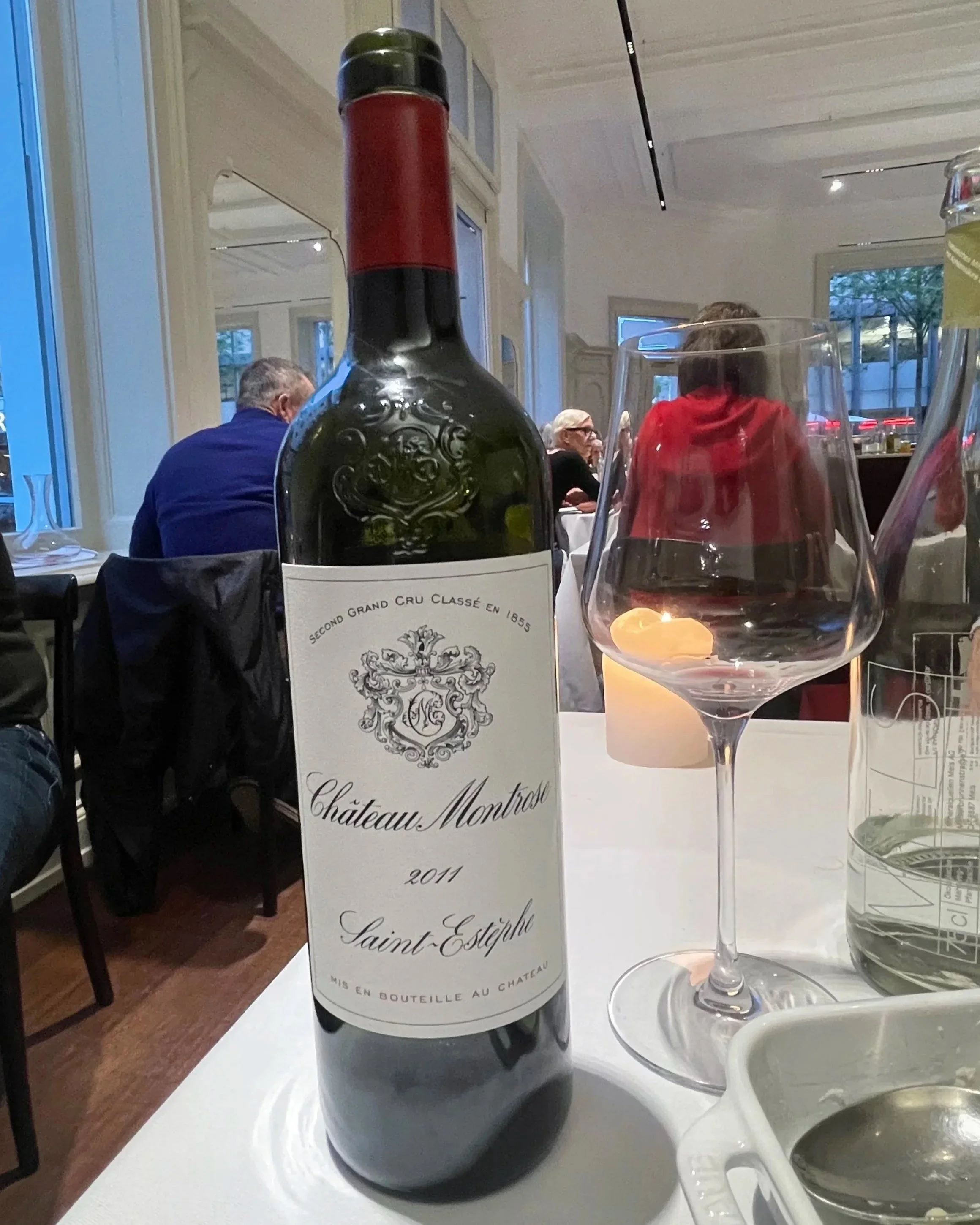
Zürich, 2026. (not a second vin)