We are continuing our series on Bündner Herrschaft. Today we turn to two names that stand apart from the rest, iconic not only for the quality of their wines but for the influence they have had on the appellation as a whole.
It is difficult to discuss this wine region without mentioning them, particularly Gantenbein. As discussed in a previous article, the winery has everything required to produce a cult wine: scarcity, inaccessibility, and devoted followers. Studach has increasingly acquired cult status as well and perhaps should be considered in the same category. Before going into detail, let us consider what they have in common.
Both focus on Pinot Noir while producing a smaller proportion of white wines. Neither winery can be visited without invitation. They produce only small quantities of wine, distributed through tightly controlled networks of merchants and importers rather than directly to the public. A bottle of Pinot Noir from Gantenbein can easily reach €180, while Studach’s Pinot Noir may sell for around €120. While the Burgundian influences are clear, the wines remain unmistakably expressions of the Bündner Herrschaft.
Gantenbein
Martha and Daniel Gantenbein took over the estate (originally run by Martha’s family) in 1981 and began producing wine the following year. Self-taught, they developed their craft in Fläsch guided by a simple principle: learn from the best. In 1991 they began experimenting with German oak barrels, and by 1993 had introduced barrel fermentation for a portion of the harvest. Two years later they took the further step of bottling without filtration, something quite radical in Switzerland at the time.
The winery produces just three wines. The largest parcel, 12.5 acres, is planted with Pinot Noir, 2.5 acres with Chardonnay, and 0.5 acres with Riesling. Yields are deliberately low at around 1.5 tons per acre, resulting in an average production of roughly 1,200 cases of Pinot Noir and 200 cases of Chardonnay. The Riesling is produced in tiny quantities and remains something of a curiosity within the appellation. Around 40% of total production is exported, something virtually unheard of in Switzerland.
The Pinot Noir typically matures in new oak for 12 to 14 months. It is a distinctive expression of the variety, with savoury, almost briny notes balanced by the freshness of red fruits. The wines reward patience, as the oak integrates beautifully with age.
I recently attended a tasting in Zürich featuring 15 vintages of Chardonnay from Gantenbein, spanning 2008 to the most recent release. The experience underlined the wine’s real strengths: exceptionally well-balanced acidity and a remarkable ability to evolve. While recent vintages showed a more restrained use of oak, the influence of the barrels remained evident in wines from the early to mid-2010s. One could argue that many white wines of that era leaned too heavily on vanilla and oak, but this was a defining trend of the period. The Chardonnay from Gantenbein carries a clear patina while continuing to adapt to changing consumer preferences, something to be celebrated.
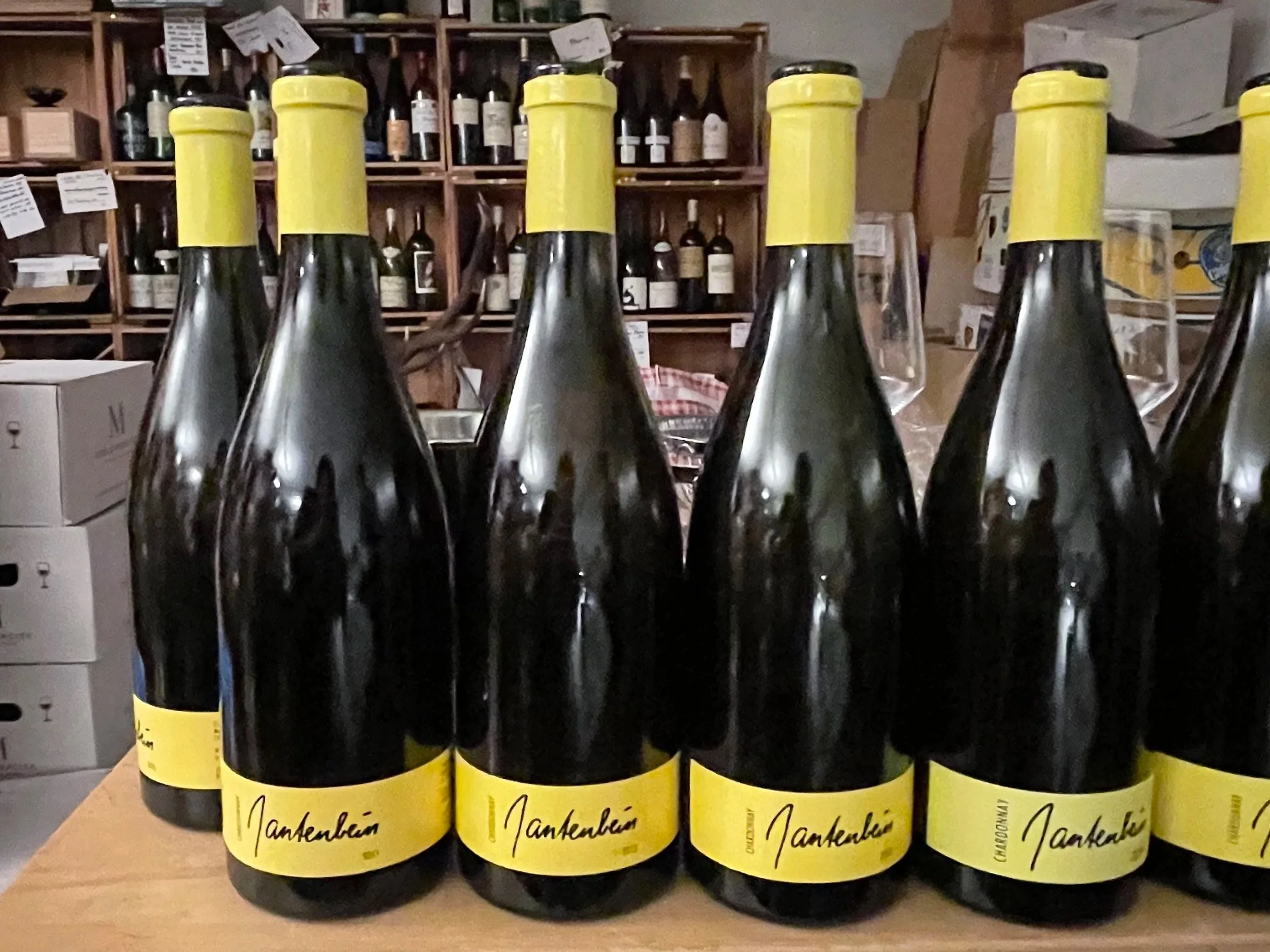
Zürich, June 2026.
Studach
Thomas Studach took over the family vineyards in Malans in 1988, becoming the third generation to farm the estate. For many years he worked part-time in other vineyards while gradually building his own domaine, driven by a relentless pursuit of quality rather than expansion. Inspired by Burgundy, he focused on lower yields, meticulous vineyard work, and a hands-off approach in the cellar. Over the following decades, he established himself as one of Switzerland’s most respected growers, earning a reputation for producing some of the country’s finest Pinot Noir.
The estate comprises approximately 7 acres of vineyards planted primarily with Pinot Noir, alongside small parcels of Chardonnay and Completer. Production remains exceptionally small at around 12,000 bottles annually. Pinot Noir accounts for roughly three-quarters of total output, with approximately 8,000–9,000 bottles produced each year. Chardonnay represents around 2,000–3,000 bottles, while Completer (one of Graubünden’s historic native varieties) is produced in tiny quantities of roughly 1,000 bottles.
The wines are defined by precision rather than power. The Pinot Noir is fermented with indigenous yeasts and matured in French oak, combining concentration with remarkable freshness and mineral tension. Chardonnay follows a similarly Burgundian philosophy, balancing texture and structure with vibrant acidity. The rare Completer is richer and more textured, yet retains the freshness that characterises the estate. While approachable in youth, the wines reward patience and develop considerable complexity with age.
Although the wines are also aged in oak (and often new oak) those from Studach are generally less marked by vanilla and toast. The Pinot Noir favours restraint and precision over opulence, developing notes of cassis and earthy complexity with age. The Chardonnay develops notes of quince while retaining its freshness and tension.
Studach’s wines sit more comfortably within the traditional style of the Bündner Herrschaft, whereas Gantenbein has developed a more distinctive signature, characterised by a strong imprint of élevage and remarkable tension in both the Pinot Noir and Chardonnay. Studach, by contrast, tends toward balance and is arguably more accessible in its youth.
While these wines are often expensive and difficult to find, they are essential to the reputation of the Bündner Herrschaft appellation, lending it prestige and purpose. They motivate younger winemakers and encourage established producers to rethink their work. The widespread adoption of new oak, unfiltered bottlings, and premium pricing owes much to the influence of Gantenbein and, to a considerable extent, Studach. Cheers.
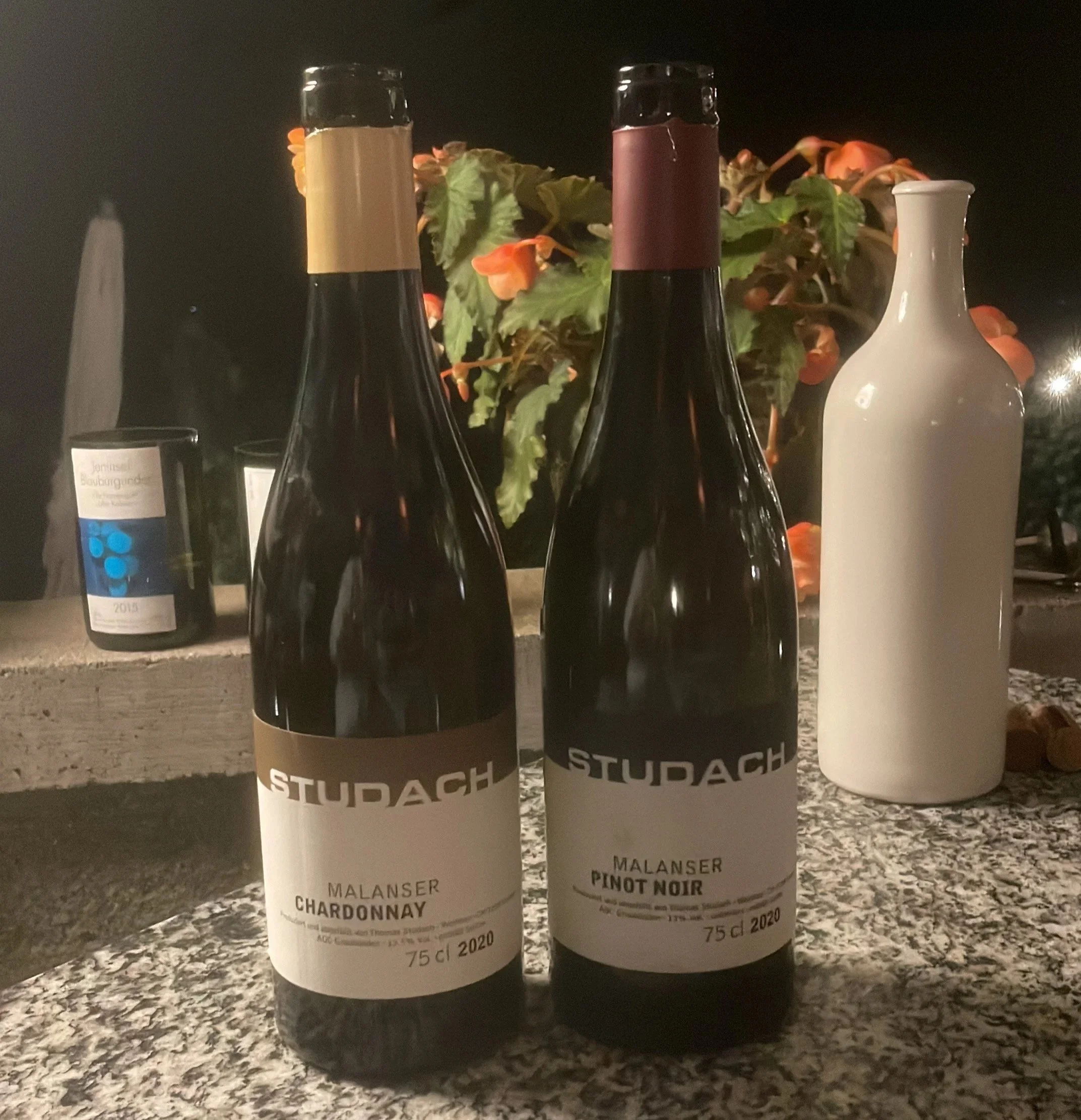
Alter Torkel, Jenins, 2023.
Read all the articles from this series, here:
Bündner Herrschaft: A Well-Kept Secret