
Don’t Throw in the Towel on Bordeaux Just Yet
Bordeaux has had better days. Once the holy ground of fine wines, it now faces a sharp downturn. Nobody is buying Bordeaux as they once did. Even the Grand Cru Classes from the Medoc struggle to sell their precious wines. How did it come to this?
Without diving too deep into Bordeaux’s complex history, one thing is clear: the region has always looked outward. The city of Bordeaux had a major port, making it easy to export wines. For centuries, England was the primary market. Aristocratic London was drinking Bordeaux as early as the 12th century. By the 14th century, it is estimated that 100,000 barrels per year were exported there. Later, the Medoc marshlands were drained, opening more land for vineyards. Up to the mid 20th century, Claret, the name the British gave Bordeaux wines due to their color, was the staple wine for the wealthy and famous in the United Kingdom.
The situation began to change after the Second World War. The romanticized story that Americans fell in love with French wines while fighting the Germans is only partly true. The main reason Bordeaux needed new markets was that the United Kingdom was broke. The war devastated its economy and created huge debts, leading to high taxes and less disposable income for fine wine. Bordeaux chateaux had to find new customers, and they looked west.
Thomas Jefferson, famously, traveled in France and loved Bordeaux, bringing back wines to the United States. High society in New York also drank Claret before Prohibition, but in small volumes. The real surge came thanks to Alexis Lichine, a Russian emigre who settled in France after the Revolution and became passionate about the wine trade. After the Second World War, he famously traveled with Bordeaux bottles in his luggage, visiting not only large coastal cities but also smaller towns, sharing tastings of Claret. Without Lichine, we might never have had Robert Parker. America became a major consumer, driven by economic growth and wealthy Americans suddenly interested in French wines.
The 1990s saw the emergence of a wealthy class in China and Russia. In search of symbols of status, expensive wines became the perfect purchase. Bordeaux understood this. The Bordeaux Wine Council and negociants actively promoted the region, traveling to Beijing, Shanghai, and Moscow. For a while, life was good in Gironde, at least until the mid 2010s.
Suddenly, the situation changed within a few years. Chinese and Russian consumers bought less French wine, and global alcohol consumption declined. The Bordeaux craze of the 1990s and 2000s drove prices so high that only speculators or the very wealthy could afford the top wines. Regular consumers turned elsewhere, leaving Bordeaux behind. Demand simply is not what it used to be.
Bordeaux’s scale is both its strength and its problem. It produces vast quantities of wine. Vine uprooting programs, often financed by the French government, are a clear sign of overproduction. Even Premier Grand Cru Classes from the Medoc are produced in significant volumes. The five 1855 Left Bank First Growths, Lafite, Latour, Margaux, Mouton, and Haut Brion, together produce roughly 900,000 to 1,000,000 bottles per year. Taking all wineries in the 1855 classification into account, total production exceeds 9 million bottles annually, roughly four times the production of Grand Cru Burgundy.
What has not been mentioned yet, for those still reading, is that Bordeaux is outstanding. These wines are not only excellent with cellaring but can be enjoyable young. The grape varieties shaped modern viticulture and can be found on nearly every continent. Bordeaux is the real OG, and it is perhaps easy to bash the top dog.
Price corrections mean it is now cheaper for us to drink well. The trinity of 2018, 2019, and 2020 vintages will drink beautifully after a few years in the cellar. Thanks to overproduction, these wines are readily available, unlike Burgundy, where securing a bottle often requires luck or connections. For the more adventurous, older vintages also trade at a discount. 2016 or 2009, for example, are both excellent years for the Medoc.
Some markets may be buying less Bordeaux, but this is an opportunity for consumers. Prices have corrected, availability is high, and it is delicious. Pour a glass of Claret and enjoy. Bordeaux is far from done. In fact, today’s Bordeaux offers the rare chance to taste legendary wines at accessible prices. The classics still impress, the vintages still tell their stories, and the region’s legacy continues to shape the world of wine. Drink deeply, cellar wisely, and remember, Bordeaux is not just surviving, it is inviting a new generation to fall in love.
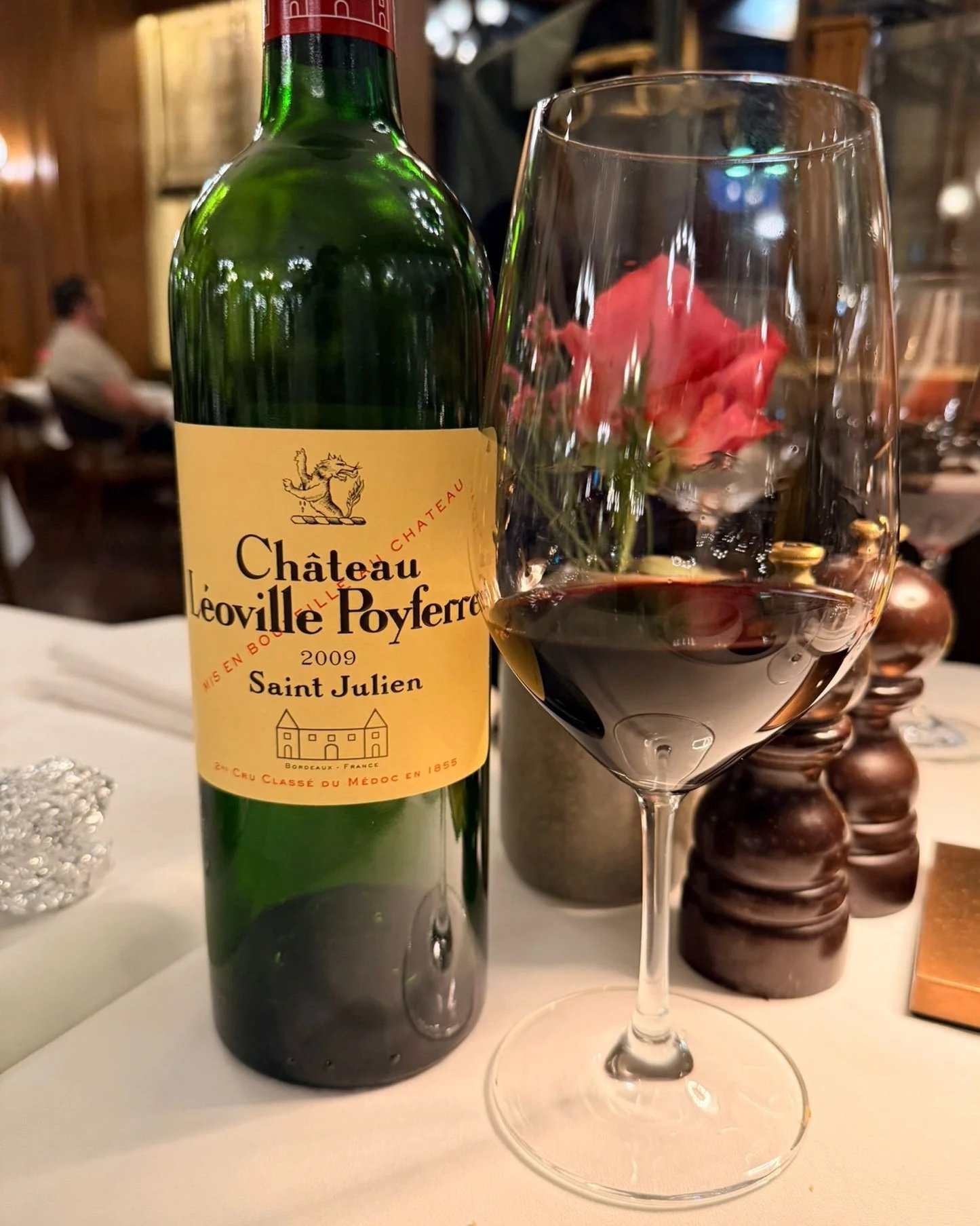
Bern, Switzerland, 2026.