
Georgia
As Ray Charles famously sang, Georgia is now on everybody’s mind and it should be. The country is attracting tourists from around the world to enjoy its rich history and delicious wines.
Wine in Georgia is among the oldest in the world. Archaeological findings date it back to around 6000 BC, making it one of the earliest known places of wine production. It has evolved through history and even survived communism. It is said that Stalin, being Georgian, helped promote it within the Soviet Union, at the expense of other wine regions such as Armenia, which largely focused on brandy production from grapes. Wine production survived, but of course had to operate through state owned enterprises. After the fall of the Soviet Union, winemaking returned to private hands, helped in part by foreign investment, which brought new wineries, while small producers began to flourish again across the country.
While Georgia has 10 wine regions, the most famous and well worth the trip is Kakheti, south of the Russian border. There lies a beautiful valley where monasteries and small villages are scattered among vineyards and farmland.
Before traveling there, you should know that wine tastings often include food. Lots of food. From ravioli shaped khinkali to cheese filled khachapuri, and an incredible selection of grilled meats, you will experience a food culture like nowhere else, shaped by a mix of influences and centuries of travel and exchange.
Among Georgia’s great wine traditions is the art of toasting. The host, or Tamada, will lead the table with speeches, poetry, or reflections, and each guest is expected to add a toast of praise or a compliment. Only then does everyone drink. I had the chance to experience this in the presence of Shota Lomtadze, a well known TV personality who also owns a vineyard in Kakheti, a wonderful way to elevate a wine tasting.
What about the wine itself? You’ve probably heard that Georgia has become known for skin contact maceration and amphora aging. I do enjoy orange wine to some extent, although it is often disappointing when poorly made or overly experimental. In Kakheti, however, orange wines feel like something else entirely. They are fresh, precise, deep, and joyful. They pair perfectly with the rich winter cuisine, where red wines can sometimes lack acidity. They are also ideal conversation wines, bottles meant to be shared slowly in good company.
Amphora aging is another major contribution from Georgia. While amphorae are not exclusive to the country, it is fair to say they have mastered the technique. Wines are made in qvevri, large clay vessels buried underground. Fermentation and aging take place in the same vessel, often with skins and stems. The underground environment ensures natural temperature stability. What makes this method special is the texture it brings, a certain grip and depth, while still maintaining freshness when done well. It is a very different expression compared to modern winemaking.
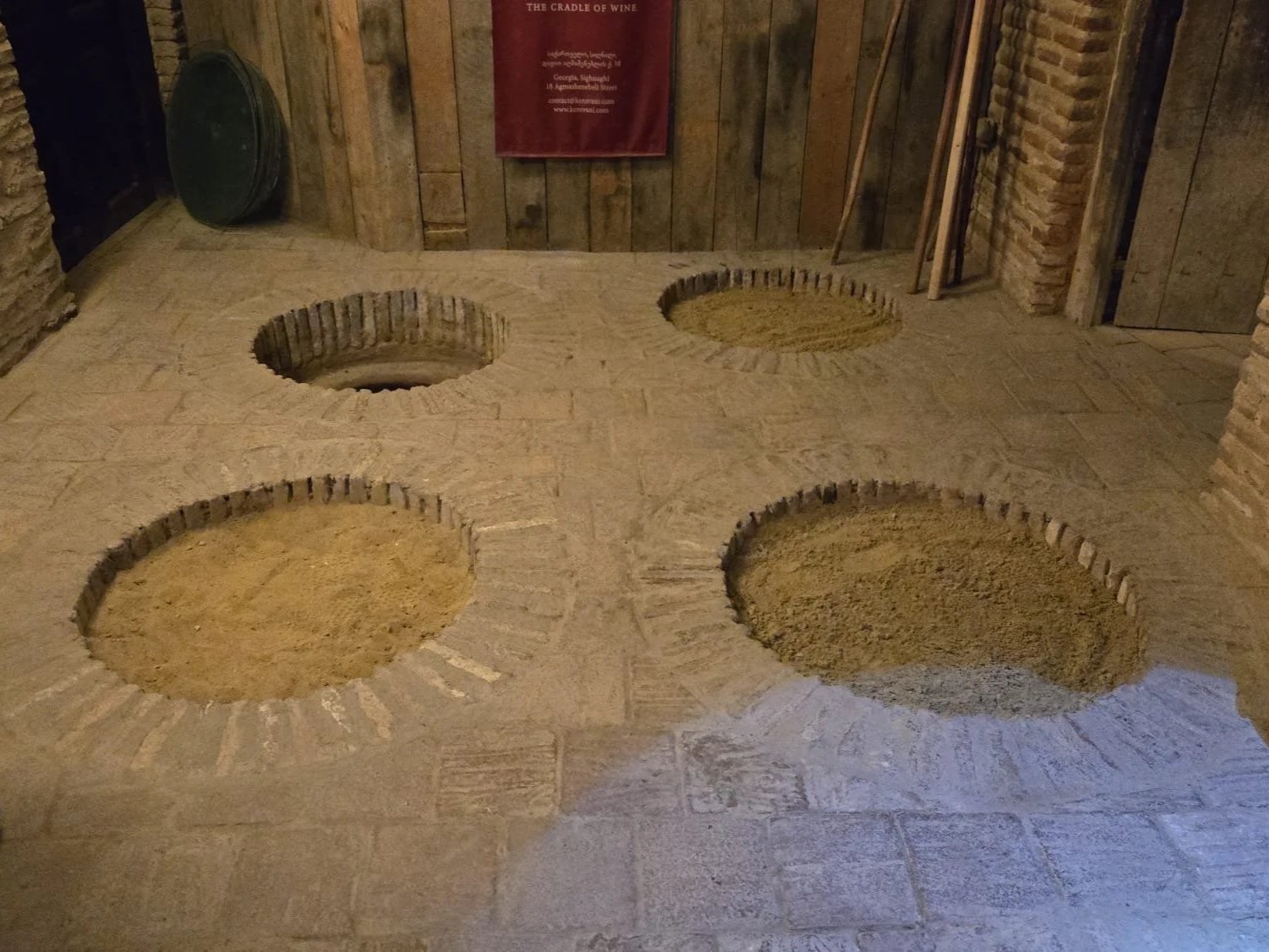
Qveris in Kerovani winery, Georgia, 2025.
Georgia has preserved a strong and distinctive identity in its winemaking, largely through the use of indigenous grape varieties. Among the most important white grapes are Rkatsiteli, known for its high acidity and structure, Mtsvane, which offers a more aromatic and softer profile, Kisi, often elegant with notes of stone fruit and herbs, and Khikhvi, which tends to be richer and more opulent.
Red wine production is dominated by Saperavi, a teinturier grape, meaning both its skin and flesh are red. Do not expect light colored wines. Think of it as a style somewhere between Lagrein and Nebbiolo from Valtellina. It is a great companion for winter stews and hearty dishes.
Among winemakers, I strongly recommend Togonidze, who produces some of the most impressive orange wines I have tasted, with a Burgundian like precision and length. What distinguishes him from others in the region is an approach that combines traditional qvevri with stainless steel, giving the wines a slightly more modern edge and, to my taste, greater precision.
Kerovani Winery, in the beautiful village of Sighnaghi, is also worth your time. A true traditionalist, the winery has embraced biodynamic practices while remaining committed to qvevri winemaking. Yes natural wines in Georgia. I particularly enjoyed their sparkling wine, or pet nat for the cooler crowd reading this.
Oh and if you do not want to drink, there is one last thing you should try, Churchkhela. A traditional dessert made by thickening grape juice and coating strings of nuts, then hanging them to dry. In markets, they may look like sausages hanging from strings, but do not be fooled, this is an addictive sweet treat. Historically, it was extremely practical, high in calories, resistant to spoilage, and easy to carry, making it ideal for travelers and soldiers.
Georgia deserves your attention. It has everything wine lovers look for, a deep history, a unique winemaking identity, and delicious food to pair with it. Book your trip without hesitation, I can recommend Eat This! Tours.
გაუმარჯოს!*
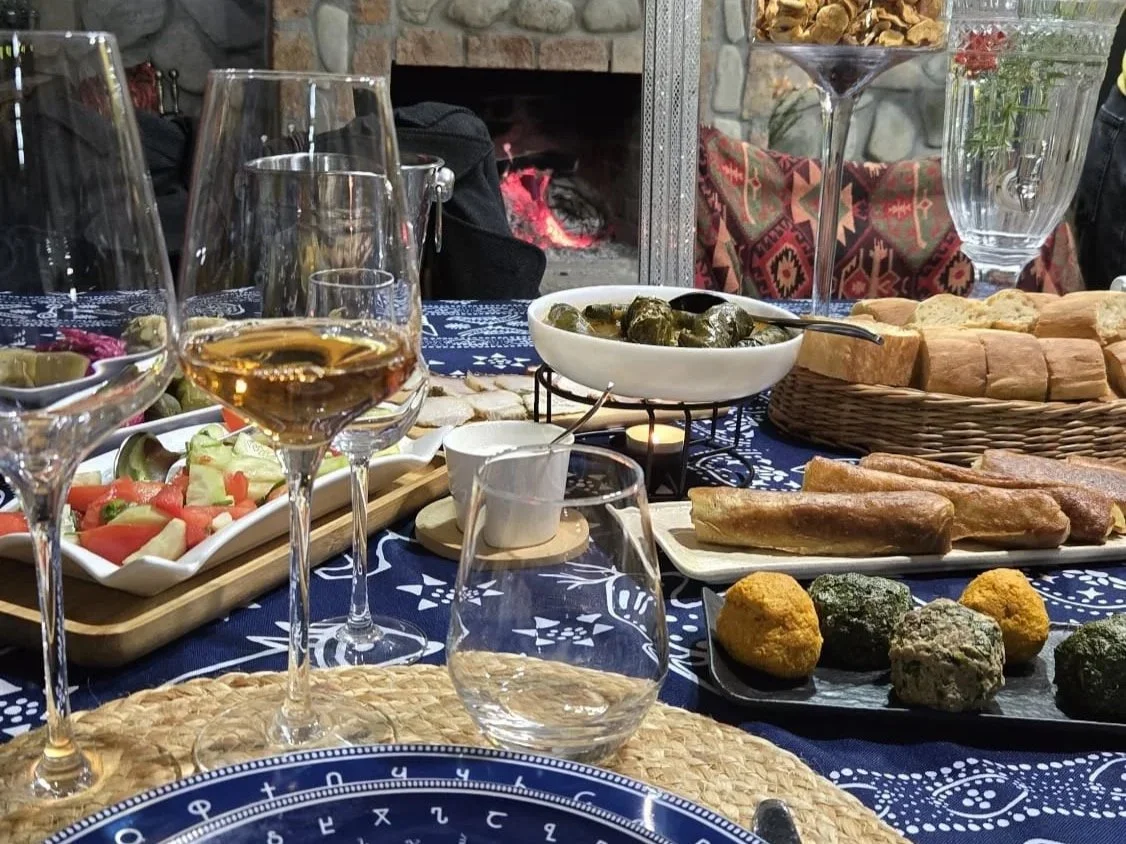
Tasting at Lagvani winery, Georgia, 2025.
*Cheers in Georgian, pronounced gaumarjos.