Fake wines?
Forgery has existed for as long as trade itself. We know of early scams from a customer complaint inscribed on a clay tablet around 1750 BCE, where a buyer received poor quality copper, most likely mixed with other metals, essentially a form of fake copper. Around the same time, wine was also being forged, and unfortunately this is not uncommon in the wine world today either.
Wine has historically been a tightly controlled beverage. In Babylon, tavern owners could face severe punishment if they watered down wine. A code of law was even written to address this, the Code of Hammurabi. Later, in Ancient Rome, Pliny the Elder described how fake wines were made by mixing herbs with chalk and water. These practices were suppressed, although deception also took simpler forms, such as mislabeling wines, which required less effort and less imagination.
To a modern palate, it is likely that these wines were not particularly good to begin with. One can assume that forgery was therefore not always easy to detect. Modern agricultural practices have created a certain standard. Some may dislike this, particularly natural wine drinkers, but it is hard to deny that quality has improved through better hygiene in the cellar and more effective disease control in the vineyard. Forgery, however, has not disappeared in the modern world. It has simply become more sophisticated. Rudy Kurniawan and Hardy Rodenstock brought it to another level.
Rudy Kurniawan was not just a fraudster; he almost felt unreal in the luxury wine world. He appeared out of nowhere in the early 2000s and quickly became one of the most prominent names among elite collectors. By around 2006 to 2008, he was selling supposedly rare French wines for enormous prices, and people trusted him. Behind the scenes, however, he was blending cheaper wines in his kitchen, aging them, and bottling them as prestigious vintages. It worked for years, until small details began to fall apart. The turning point came when Laurent Ponsot from Domaine Ponsot noticed bottles of Clos Saint Denis being sold from vintages his domaine had never produced. That inconsistency helped expose the fraud. Kurniawan was arrested in 2012 and convicted in 2013, revealing one of the largest scams in wine history. The videos from his arrest in California are striking, showing a complex laboratory setup where he assembled his wines.
Hardy Rodenstock feels different. Less like a clear criminal and more like a mysterious figure surrounded by doubt. He rose to fame in the 1980s and 1990s by presenting extremely rare bottles, including wines said to have belonged to Thomas Jefferson. One of these, a 1787 Château Lafite, sold in 1985 for around 156,000 dollars, a record at the time. He also organised lavish tastings where rare wines, often in large formats, were opened in impressive quantities. Over time, this abundance itself became suspicious. Doubts grew gradually, and by the 2000s experts were questioning the authenticity of some of these bottles. Rodenstock was never convicted, but the doubts remain.
Both forgers were successful in part because of auction houses, which were willing to sell extremely expensive wines. These houses typically take commissions of 20 to 30 percent, and rare bottles generate attention and profit. Auction houses do not guarantee authenticity and often do not fully disclose provenance. The risk lies with the buyer. It is not unreasonable to assume that in some cases there were suspicions, but little incentive to investigate too closely.
What exposed both cases was not necessarily a difference in taste compared to the original wines. For rare and old bottles, very few people have any real reference point. Who can say with confidence that a 1927 Mouton Rothschild tastes wrong? There is also a psychological element. When someone pays an extraordinary price for a bottle, it becomes difficult to admit that something is off. Objectivity tends to disappear as prices increase. Only a few critics raised doubts early on, and even then, they were largely ignored.
Wine is not only about taste. Sommeliers and critics may focus on aroma and flavour, but wine also carries a strong symbolic and emotional dimension. This becomes even more evident at the highest end of the market, where bottles are often far beyond their ideal drinking window. Paying 10,000 euros for a century old bottle of Lafite Rothschild has little to do with enjoyment. It is closer to speculation. In that sense, it resembles phenomena such as the Tulip Mania, where perceived rarity drives prices far beyond intrinsic value. At that point, the wine becomes an object rather than a drink.
For most people, fake wine will not be an issue, or at least only a rare and unfortunate experience. Those willing to spend 100,000 euros on a single bottle of wine must accept that they are also buying uncertainty. At that level, the risk of forgery is part of the transaction. When the purchase is speculative, one should accept that the risk the value can go to 0. As one would when buying a share in the stock market. I would rather buy wine to enjoy over a meal in great company.
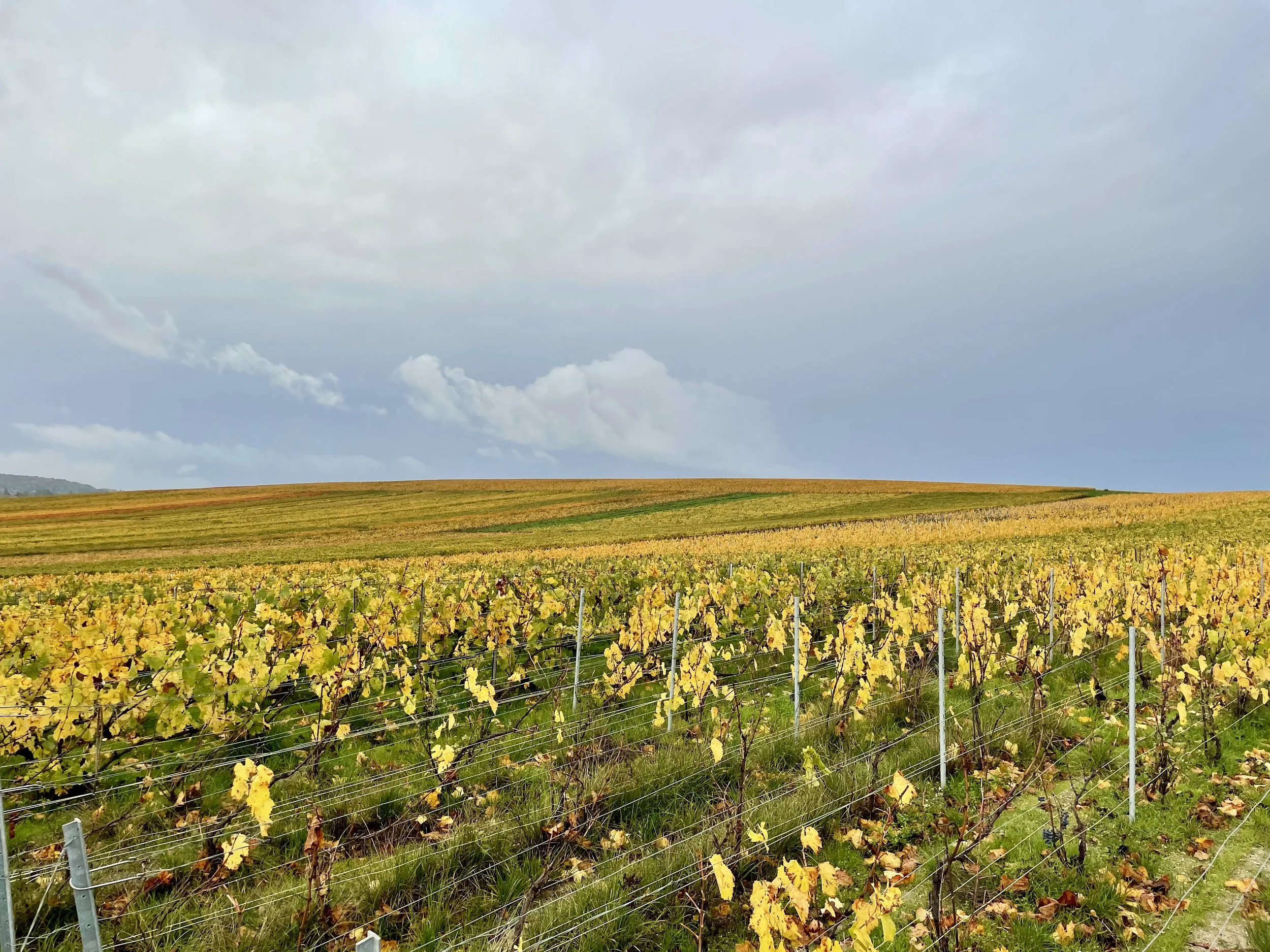
Rilly-la-Montagne, France, 2022.