
Cooperative wines may sound like an insult to fine wine. It reminds people of the cheap rosé they drank by the pool in Provence, which gave them unconditional headaches. But is this always the case? The prejudice against cooperatives is not at all justified.
Let me start by saying that I have nothing against cheap rosé unless I am forced to drink it. If people find pleasure in it, so be it. There should be a drink for everybody. Sure, this isn’t fine wine, but it must bring pleasure to someone; otherwise, they would have stopped producing it – or so I am led to believe.
Cooperatives are a relatively modern phenomenon, emerging in the late 19th century in central and western Europe. In viticulture, they were seen as a way to share knowledge, tools, or improve market access among small landowners. Some of these structures have survived the test of time; half of the wines in France are made by cooperatives nowadays. And we are not only talking about the village cooperatives from southern France – some famous Champagne brands are also under a cooperative structure, such as Nicolas Feuillatte or De Saint-Gall. Cooperatives are not limited to France; you will also find large and successful cooperatives in Italy.
French cooperatives have often, in their essence, fought for fair prices. This is very true for the first, Cave de Maraussan, established in 1901. From its foundation, there was a clear will to secure better conditions and prices for small winegrowers. By joining together, they could pool resources, build modern facilities, vinify collectively, and negotiate fairer terms, allowing them to regain control over production and income. It also became quite political, with Jean Jaurès, the OG of French socialism, supporting the creation of cooperatives. Quality was less of a topic then –and perhaps still now in certain cases.
The Cantina Sociale di Barbaresco started in the same period as their French colleagues but had a slightly different vision from the beginning. Sure, selling wines at a fair price was fundamental, but they also wanted to improve quality and build a proper image for their region. The cooperative disappeared in the wake of fascism in Italy but was reborn in the late 1950s under its new name: Produttori del Barbaresco. Since then, it has been at the forefront of modern cooperatives. Why? First, the cooperative has fairly strict rules: you need to sell all your grapes to them, only Barbaresco is produced, and there is very strict control in the vineyards. Second, there’s a collegial aspect to the discussions, where all the winegrowers have voting powers. Finally, they are obsessed with quality. This can be confirmed easily if you have the chance to drink older vintages: impeccably made, they survive and often improve with time.
If you talk about cooperatives to someone in Eastern Europe, it will revive a darker past. Agriculture, including winemaking, under Soviet control was managed by state enterprises that were also called cooperatives. They were owned by the people, but in effect the government had full control, and small landowners had no say. As a small landowner, you had to harvest what was decided centrally and could not influence quality or quantity. In certain cases, you could theoretically make wine for your own consumption, but since the yield expected by the cooperative was so high, you were left with little to nothing. The quality was, of course, fairly poor. As most agricultural output was decided centrally, quantities had to remain consistent – you couldn’t have a bad harvest. You had to resort to irrational measures to ensure a stable output, in total contradiction with modern winemaking. When the East opened to the world, winemaking mostly returned to private hands, and nobody wanted to work with cooperatives anymore. They wanted to decide on their own. Understandable.
There are several cooperatives producing stellar wines. What distinguishes such cooperatives from others is their focus on quality. They aim to make great wines to promote their region, with the belief that profit will follow. a great example of great wines produced by a cooperative can be found in Südtirol, close to Bolzano. Cantina Terlan makes some of the best whites from Italy and has become an international sensation. them too are focusing on quality and terroir. In a world where people are drinking less, cooperatives could be an answer if the focus is on quality rather than quantity. There’s a teachable moment here for both cooperatives and consumers: good wines can be found everywhere.
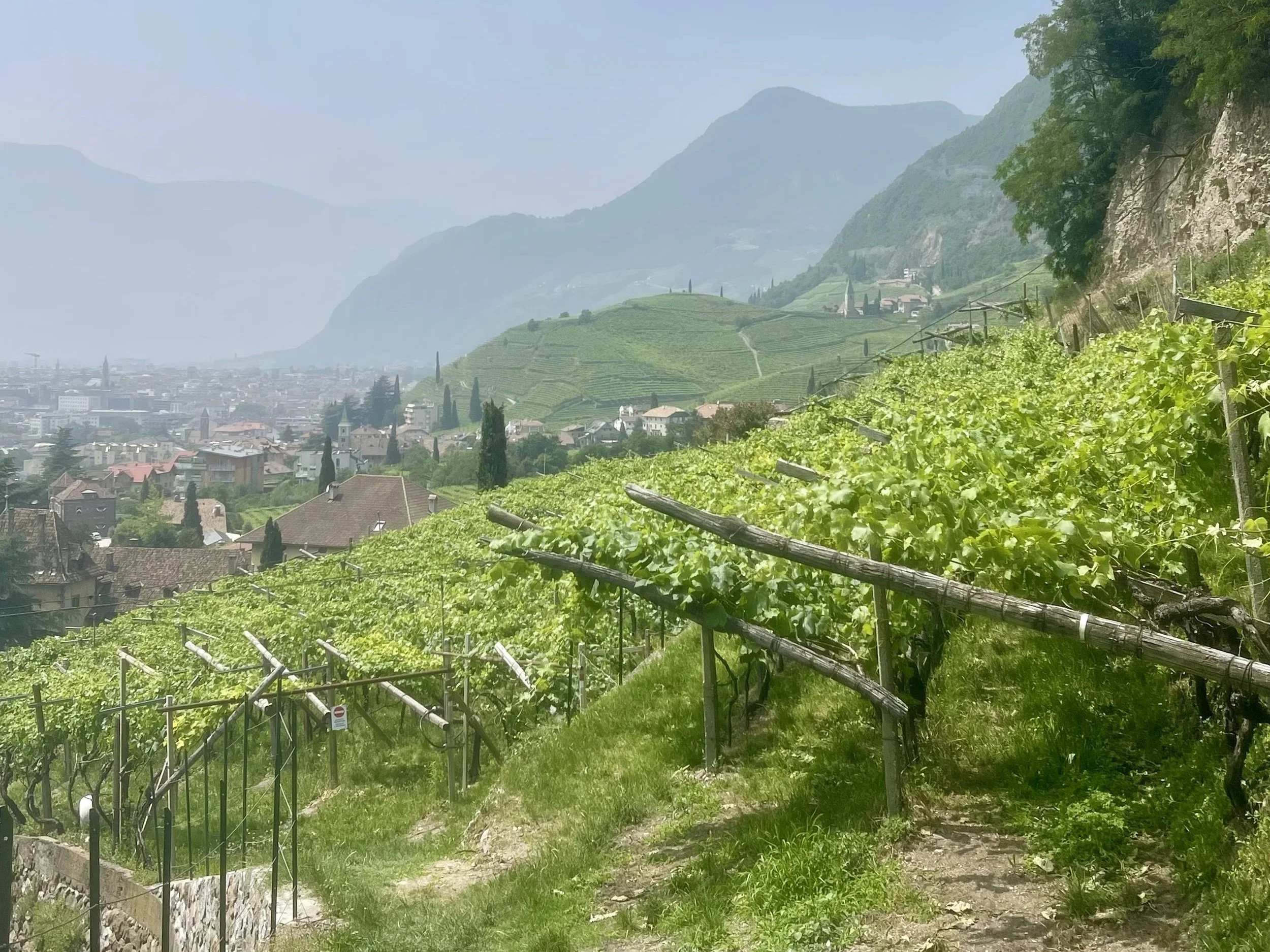
Bolzano, Italy, 2025.