The third hill: Roero
Northern Italy is an incredibly rich part of the world when it comes to wine. On the western side, Piemonte offers terroir driven wines that have a worldwide reputation. Barolo and Barbaresco are some of the most known names in the wine world. There’s a third hill that you should know about: Roero.
Nebbiolo is a fascinating grape variety that will be discussed often here. It should be no secret that I personally adore old Nebbiolo and have always been fascinated by Barolo and Barbaresco. Roero offers a new side of the grape, where the vineyards are perhaps more intertwined with orchards and forests. This is less common in Barolo, as viticulture took over all other farming.
Roero is actually not that small. It has roughly 1,300 hectares of vineyards, while Barolo has 2,100. Barbaresco has slightly less than 900 hectares. So the size isn’t the reason why you don’t often see Roero on a wine list in a restaurant. The soils of Barolo and Roero are a major factor in the distinct styles of their Nebbiolo wines. Barolo’s vineyards sit on clay and marl rich soils, which retain water and produce wines with powerful structure, firm tannins, and earthy, complex flavors. In contrast, Roero’s vineyards grow on sandy, silty soils with sandstone, which drain quickly and yield Nebbiolo that is lighter, more aromatic, and softer.
The first reason is that the region has always been in the shadows of the hills of Langhe, Barolo, and Barbaresco. For a while, Roero focused on bulk wines and perhaps cared less about quality. Luckily, a shift came in the late 1970s and 1980s, achieving DOCG in 2004. By then, not only Barolo but Barbaresco were already well regarded internationally, so the growth in quality in Roero was overshadowed by its neighbors.
The second reason is that Roero was overshadowed by Roero. Behind this Kafkaesque statement lies a very successful story from the region. It had managed to save a grape from total disappearance from the face of the planet. Once very commonly planted, Arneis was abandoned or worse, uprooted in favor of grapes that were more in trend at the time. Perhaps white wines were also less in fashion, and the difficulty behind its low yields, susceptibility to disease, and oxidation forced winemakers to do something else. It is only thanks to a few winemakers, such as Giovanni Almondo (more on him later), that Arneis was saved in the 1970s. Suddenly, Roero Arneis became a name worldwide: a mineral, low alcohol wine that paired perfectly with light food. A go to wine in many restaurants and wine bars around the world. So Roero became synonymous with fresh white wines.
Finally, a more philosophical reason is perhaps how many winemakers had promoted Roero. Supposedly, it was a fresher version of Barolo, a wine you could drink young and didn’t need a lot of cellaring. Perhaps true: the wines of Roero are fresher, with a hint of minerality that is sometimes missing in Langhe. Unfortunately, it also sounds like the wines are not going to age well and are perhaps less exclusive. Cellaring a wine adds a mystical effect to the process of drinking, where simply laying a bottle in a dark room supposedly improves it over time. The truth is that Roero is approachable earlier than Barolo but can also age beautifully. Barolo is often difficult to enjoy in the first decade, whereas Roero is fresher and drinkable.
Luckily, some winemakers are proving that you should consider Roero seriously for Nebbiolo. While Giovanni Almondo has been at the forefront of great Arneis, he also produces some of the finest versions of Roero. Matteo Correggia is another winery that can be strongly recommended, with a beautifully made La Val dei Preti on sandy soil.
As is often the case, the best way to understand Roero is to visit the area. Piemontese cuisine deserves a page on its own; it is perhaps the best cuisine to pair with wines. Earthy, rich, and flavorful, it is always an immense pleasure to eat in a small trattoria. It is time to open your mind to the vast diversity of Nebbiolo and drink a beautiful Roero.
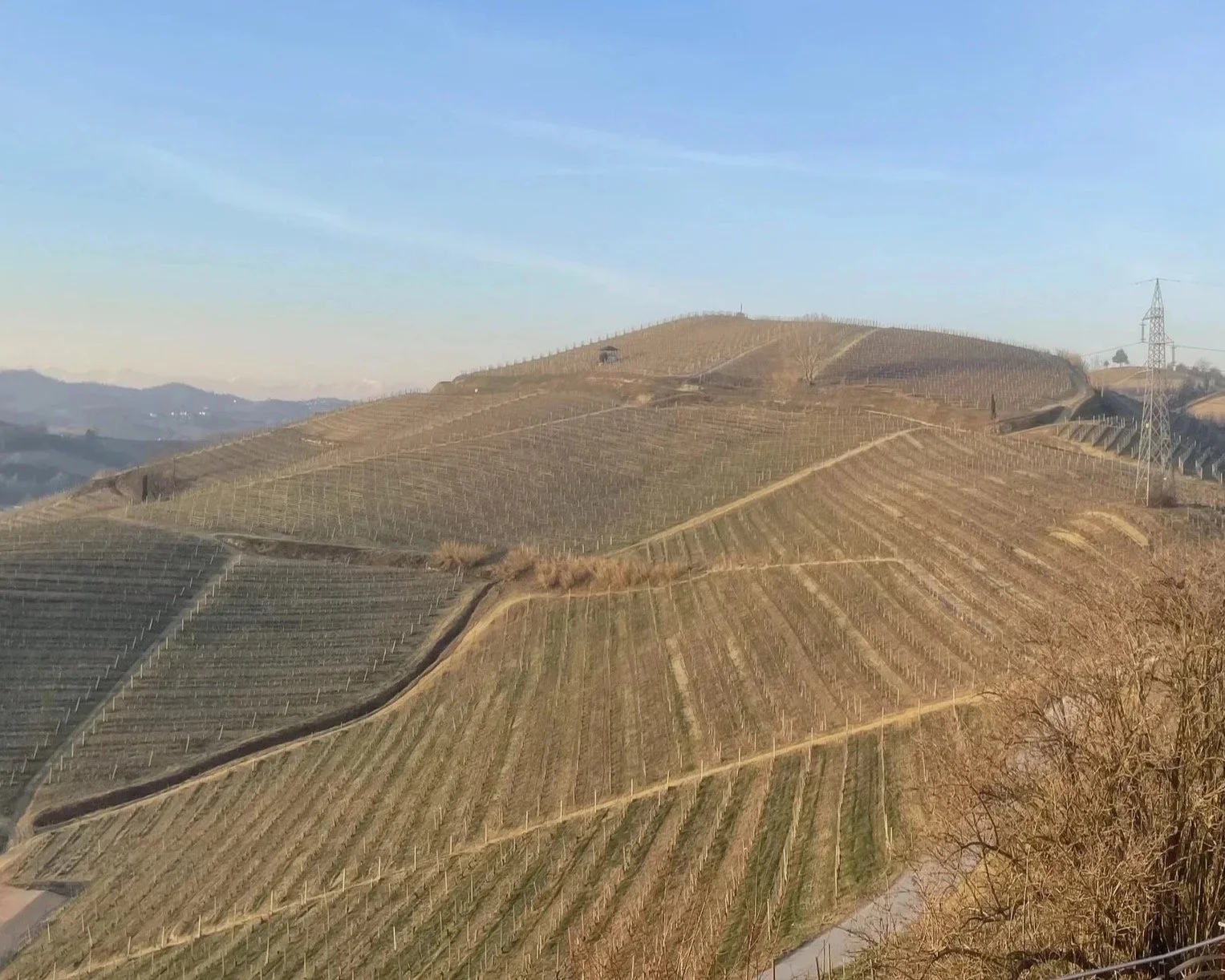
Canale, Italy, 2023.